


 English
  Español
  اللغة العربية
  Russian
  Português
  Français
  ภาษาไทย
Industry News
Gastroenterology Surgical Instruments & Hemostats: Minimally Invasive GI Care Breakthroughs in 2026
Content
Precision and Minimally Invasive Design Principles
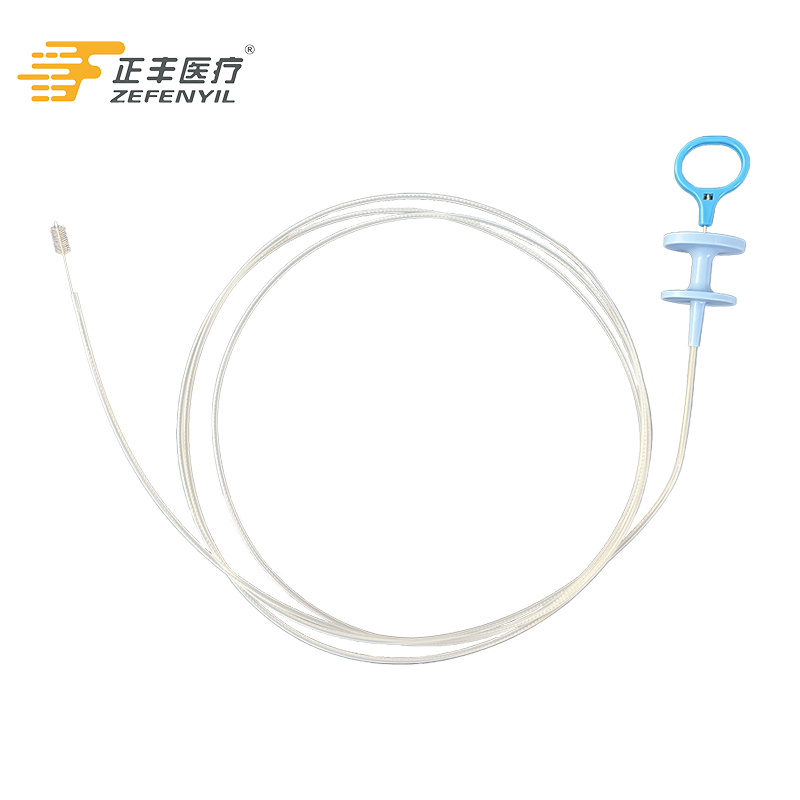
Gastroenterology Surgical Instruments are engineered to navigate the complex anatomical pathways of the digestive system while delivering therapeutic interventions through natural orifices or minimal incisions. Unlike traditional open surgery tools, these endoscopic instruments integrate diagnostic imaging, tissue manipulation, and hemostatic control within a single flexible or rigid platform. The shaft diameter typically ranges from 2.8mm to 3.8mm to accommodate standard endoscope working channels, while articulation mechanisms allow 360-degree tip deflection for precise targeting of lesions in the esophagus, stomach, or colon. High-grade stainless steel alloys and medical-grade polymers ensure durability through repeated sterilization cycles without compromising flexibility or torque response.
Key Features of Modern Endoscopic Tools
- Ergonomic handle designs with tactile feedback enable surgeons to modulate grip force during delicate tissue manipulation, reducing the risk of inadvertent perforation or trauma.
- Integrated irrigation and suction channels maintain clear visualization during procedures by removing blood, debris, or insufflation gas without instrument withdrawal.
- Radiopaque markers on instrument tips facilitate real-time fluoroscopic guidance during complex interventions such as biliary stent placement or pancreatic duct access.
The integration of high-definition optics and LED illumination directly into Gastroenterology Surgical Instruments eliminates the need for external light sources or separate imaging catheters, streamlining setup time and reducing equipment clutter in the procedure room. Advanced coatings, such as hydrophilic polymers on insertion shafts, minimize mucosal friction and patient discomfort during prolonged examinations. These design refinements collectively enhance procedural efficiency while maintaining the highest standards of patient safety and operator control.
Critical Role of Hemostats in Gastrointestinal Procedures
Hemostats represent a cornerstone instrument category within gastroenterology surgical workflows, providing reliable control of bleeding during biopsy, polypectomy, or therapeutic resection procedures. Modern endoscopic hemostats feature finely serrated jaws with atraumatic tips that grasp vessels or tissue without crushing, while locking mechanisms maintain consistent compression force during coagulation. Bipolar and monopolar electrosurgical compatibility allows simultaneous mechanical clamping and thermal sealing, significantly reducing procedure time and blood loss compared to manual pressure techniques alone.
| Hemostat Type | Primary Application | Key Advantage |
| Rotatable Biopsy Forceps | Targeted tissue sampling with hemostatic capability | 360-degree jaw orientation for optimal lesion access |
| Through-the-Scope Clips | Mechanical closure of bleeding ulcers or post-polypectomy sites | Immediate hemostasis without thermal injury to surrounding tissue |
| Electrosurgical Snare with Hemostatic Mode | Polyp resection with concurrent vessel coagulation | Reduced risk of delayed bleeding through integrated thermal control |
Optimizing Hemostatic Techniques for Complex Anatomy
Effective hemostasis in the gastrointestinal tract requires adapting instrument selection to specific anatomical challenges. In the thin-walled esophagus, low-profile hemostats with fine-tip jaws minimize perforation risk while achieving secure vessel occlusion. For bleeding gastric ulcers, rotatable hemostats allow surgeons to approach lesions from optimal angles despite limited endoscope maneuverability. When managing diffuse oozing in the colon, combination devices that deliver topical hemostatic powders through the same channel as mechanical clamps provide layered control strategies. Training protocols emphasizing proper jaw alignment, compression duration, and energy settings ensure consistent outcomes across diverse clinical scenarios.
Integrated Diagnosis and Treatment Capabilities
The defining advantage of modern Gastroenterology Surgical Instruments lies in their ability to seamlessly transition between diagnostic evaluation and therapeutic intervention within a single procedural session. Biopsy forceps with integrated hemostatic tips allow immediate tissue sampling followed by vessel sealing if bleeding occurs, eliminating the need for instrument exchanges that prolong procedure time. Similarly, polypectomy snares equipped with injection needles enable submucosal lifting prior to resection, reducing perforation risk while maintaining hemostatic readiness. This integrated approach is particularly valuable for managing complex lesions that require histological confirmation before definitive treatment.
- Stent delivery systems with fluoroscopic and endoscopic guidance markers facilitate precise placement in malignant strictures while minimizing trauma to adjacent healthy tissue.
- Multifunctional catheters combining irrigation, suction, and drug delivery channels support comprehensive management of inflammatory conditions like Crohn's disease or ulcerative colitis.
- Smart instruments with embedded sensors provide real-time feedback on tissue density, blood flow, or temperature, enabling data-driven decisions during complex interventions.
By consolidating multiple procedural steps into unified instrument platforms, gastroenterology teams reduce setup complexity, minimize patient exposure to repeated instrument insertions, and accelerate overall workflow efficiency. This integration directly translates to shorter procedure times, lower anesthesia requirements, and enhanced patient comfort—critical factors when treating elderly or critically ill populations with limited physiological reserve.
Patient Benefits and Clinical Outcomes
The minimally invasive nature of Gastroenterology Surgical Instruments delivers measurable advantages across key patient-centered outcomes. Reduced tissue trauma translates to less post-procedural pain, lower analgesic requirements, and faster return to normal activities. The precision of endoscopic techniques minimizes collateral damage to healthy organs, decreasing complication rates such as infection, adhesions, or organ dysfunction. For elderly patients or those with significant comorbidities, these benefits are particularly pronounced, as shorter recovery times reduce the risk of hospital-acquired complications like pneumonia or deep vein thrombosis.
| Outcome Metric | Minimally Invasive Approach | Traditional Open Surgery |
| Hospital Stay Duration | Same-day discharge or 1-2 days | 5-10 days average |
| Return to Normal Activities | 3-7 days | 4-6 weeks |
| Major Complication Rate | <2% | 5-15% |
Special Considerations for Elderly and Critically Ill Patients
When treating frail or high-risk populations, the safety profile of Gastroenterology Surgical Instruments becomes paramount. Reduced anesthesia requirements, minimal blood loss, and shorter procedural times lower physiological stress on compromised organ systems. Instruments designed for single-use or rapid sterilization support infection control protocols critical for immunocompromised patients. Additionally, the ability to perform procedures in outpatient settings or at the bedside expands access for patients who cannot tolerate transport to operating rooms. These advantages collectively improve quality of life and survival outcomes for vulnerable patient groups.
Technological Advancements and Future Directions
Continued innovation in Gastroenterology Surgical Instruments focuses on enhancing precision, intelligence, and connectivity. Robotic-assisted endoscopic platforms provide tremor filtration and motion scaling for sub-millimeter accuracy during complex resections. Artificial intelligence algorithms integrated into imaging systems can highlight suspicious lesions in real-time, guiding instrument deployment with data-driven precision. Wireless telemetry capabilities enable remote monitoring of instrument performance and procedural metrics, supporting quality improvement initiatives and training programs.
Emerging Innovations in Gastroenterology Surgical Instruments
Next-generation developments include bioresorbable hemostatic clips that eliminate the need for retrieval procedures, shape-memory alloy instruments that adapt to anatomical contours, and augmented reality overlays that project critical anatomical landmarks directly into the endoscopic view. As these technologies mature, Gastroenterology Surgical Instruments will further blur the line between diagnosis and therapy, enabling increasingly complex interventions through minimally invasive approaches. The ongoing collaboration between engineers, clinicians, and patients ensures that innovation remains focused on tangible improvements in safety, efficacy, and accessibility for diverse global populations.


- Quick Links
- About Us
- Quality
- Service
- News
- Contact us
- Our Product
- Disposable Endoscopic Laparoscopic Instruments
- Disposable Wound Closure
- Thoracic Surgery Instruments
- Electrosurgery Instruments
- Open Surgical Instruments
- Urinary Anorectal Surgery Instruments
- Gastroenterology Surgical Instruments
- Medical Auxiliary Equipment
- Blood Preparation Device
- Contact us
- Tel:+86-519-69878833
- Phone:+86-13584319056
- E-mail:[email protected]
- Address:Building 2D, 2C and 3C, Wujin Sci-tech Pioneer Park, No. 256 Middle Mingxin Road, Hutang Town, Wujin District, Changzhou, 213164 Jiangsu P.R. China

