


 English
  Español
  اللغة العربية
  Russian
  Português
  Français
  ภาษาไทย
Industry News
Closure Clips for Laparoscopic Surgery: Materials & Sizing Guide
Content
- 1 The Role of Disposable Endoscopic Laparoscopic Instruments in Modern Surgery
- 2 What Are Disposable Non-Absorbable Closure Clips
- 3 Material Science Behind the Three-Component Construction
- 4 Correct Sizing: The Most Critical Application Decision
- 5 Sterilization, Single-Use Policy, and Infection Control Rationale
- 6 Integration with Disposable Endoscopic Laparoscopic Instrument Systems
The Role of Disposable Endoscopic Laparoscopic Instruments in Modern Surgery
Minimally invasive surgery has fundamentally transformed the landscape of clinical care over the past three decades. Procedures that once required open incisions spanning 15 to 30 centimeters are now routinely performed through two to four trocar ports, each no larger than 12 millimeters in diameter. This shift has delivered measurable patient benefits — reduced blood loss, shorter hospital stays, faster return to normal activity, and significantly lower rates of wound infection and hernia formation. Underpinning this transformation is a continuous evolution in the design and materials science of disposable endoscopic laparoscopic instruments, which must deliver precision, reliability, and safety through narrow working channels under the constrained visibility conditions of a laparoscopic operative field.
Among the most clinically critical categories within this instrument family are tissue and vessel ligation devices — and specifically, disposable non-absorbable closure clips. These small but essential components are deployed at some of the most consequential moments in laparoscopic surgery: the division of the cystic duct and artery in cholecystectomy, the control of mesenteric vessels in bowel resection, the ligation of vascular pedicles in nephrectomy, and the closure of body cavity structures across a wide range of gynecological, urological, and general surgical procedures. Getting clip selection, sizing, and application technique right is not a matter of preference — it is a patient safety imperative.
What Are Disposable Non-Absorbable Closure Clips
A disposable non-absorbable closure clip is a pre-formed mechanical ligation device designed to permanently occlude blood vessels, ducts, or body cavity tissue during surgical procedures. Unlike absorbable ligatures or clips that are gradually metabolized by the body over weeks to months, non-absorbable closure clips remain in situ indefinitely following implantation. This permanence is intentional — the clip provides a stable, long-term mechanical seal that does not rely on the body's biological resorption process and therefore carries no risk of delayed ligation failure associated with absorbable material degradation.
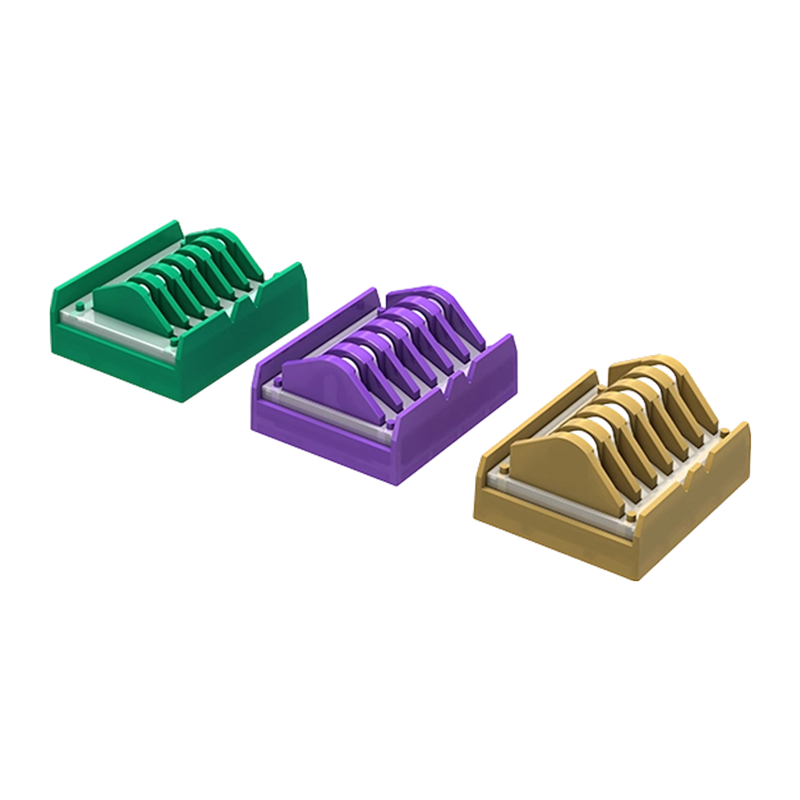
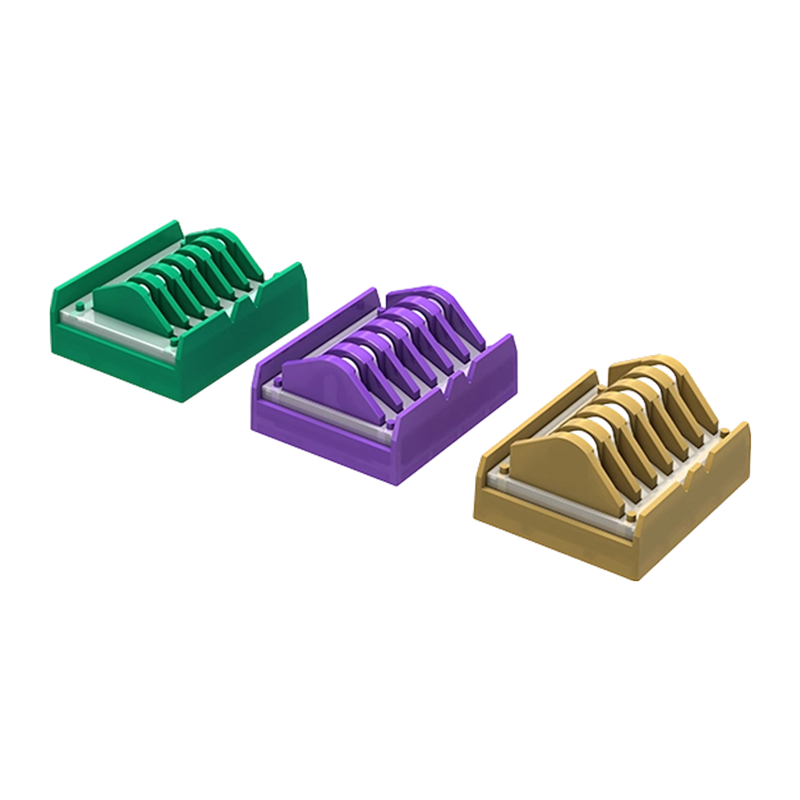
The disposable non-absorbable closure clip described here consists of three distinct components, each manufactured from a specific polymer selected for its mechanical, biological, and processing properties. The closure clip itself — the component that makes direct contact with tissue and provides the ligation force — is manufactured from polyoxymethylene copolymer (POM). The base, which interfaces with the clip applier instrument and controls the deployment mechanics, is manufactured from acrylonitrile butadiene styrene (ABS). The base cover, which protects the assembly during storage and handling prior to use, is manufactured from polypropylene (PP). Each material choice reflects a deliberate engineering decision that balances mechanical performance requirements against biocompatibility, sterilization compatibility, and manufacturing precision.
Material Science Behind the Three-Component Construction
Understanding why each polymer was selected for its specific role in the disposable non-absorbable closure clip assembly provides important insight into how the device performs under the mechanical and biological demands of surgical deployment.
Polyoxymethylene Copolymer (POM) for the Closure Clip
POM, also known by trade names such as Delrin and Celcon, is an acetal engineering polymer with an exceptionally favorable combination of properties for tissue contact applications. Its high stiffness (flexural modulus of approximately 2,700 MPa) ensures that the clip maintains its locked geometry under the sustained compressive forces generated by vessel wall recoil and tissue edema following deployment. Its low coefficient of friction allows the clip to close smoothly and predictably without the stick-slip behavior that can result in inconsistent ligation force. POM's dimensional stability under sterilization conditions — particularly ethylene oxide exposure — ensures that clip geometry is preserved through the sterilization cycle without dimensional distortion that could compromise the locking mechanism. Biocompatibility testing under ISO 10993 confirms that POM copolymer formulations are suitable for prolonged tissue contact, making them an appropriate choice for a permanently implanted ligation device.
Acrylonitrile Butadiene Styrene (ABS) for the Base
The base component serves as the mechanical interface between the closure clip and the clip applier instrument. It must transmit the deployment force from the instrument jaw to the clip precisely and repeatably, while maintaining its structural integrity through the handling, storage, and sterilization cycle. ABS is selected for this role because of its excellent impact resistance, dimensional accuracy in injection molding, and compatibility with the surface finish requirements needed for reliable instrument engagement. The rubber phase dispersed within the ABS matrix absorbs the impact energy generated when the clip applier closes, preventing crack propagation that could compromise base integrity during the high-force final closure stroke.
Polypropylene (PP) for the Base Cover
The base cover performs a protective function, shielding the clip and base assembly from mechanical damage and contamination during packaging, transport, and storage. Polypropylene is the logical material choice for this component: it is lightweight, inexpensive, easily injection-molded to precise dimensions, and offers excellent chemical resistance to the ethylene oxide sterilant used in the final sterilization process. Its natural hinge fatigue resistance — the property that makes PP the standard material for living hinges in packaging applications — ensures that the cover can be removed cleanly and reliably by the scrub nurse immediately before instrument loading without cracking or fragmenting in a way that could introduce particulate contamination into the sterile field.
Correct Sizing: The Most Critical Application Decision
The single most important clinical decision in the application of any closure clip — whether used with disposable endoscopic laparoscopic instruments or open surgical appliers — is the selection of the correct clip size for the target vessel or tissue structure. A clip that is too small for the structure it is applied to will fail to achieve complete ligation, leaving a partially open lumen through which blood or bile can leak into the operative field or peritoneal cavity. A clip that is too large will not generate sufficient compression force on the vessel wall to achieve reliable occlusion and may dislodge during instrument withdrawal or postoperative tissue movement.
Closure clip sizing conventions vary between manufacturers, but are generally categorized by the range of tissue or vessel diameter that each size is designed to accommodate. The following table provides a representative sizing framework:
| Clip Size | Vessel / Tissue Diameter Range | Typical Surgical Applications |
| Small (S) | Up to 3 mm | Small arterial branches, bile duct radicles, lymphatics |
| Medium (M) | 3 – 5 mm | Cystic duct, cystic artery, small mesenteric vessels |
| Medium-Large (ML) | 5 – 7 mm | Renal artery/vein branches, ovarian pedicles, appendix base |
| Large (L) | 7 – 10 mm | Major vascular pedicles, thick ductal structures |
Clinicians must confirm the appropriate size by direct visual assessment of the target structure under laparoscopic magnification before clip application. When tissue diameter is at the upper limit of a size range, applying two clips on the proximal side and one on the distal side of the planned division point provides additional security against postoperative clip displacement — a practice recommended in major laparoscopic procedural guidelines for structures such as the cystic duct where bile leak carries significant morbidity.
Sterilization, Single-Use Policy, and Infection Control Rationale
Every unit of this disposable non-absorbable closure clip is sterilized with ethylene oxide (EO) prior to distribution. Ethylene oxide sterilization is the preferred method for polymer-based medical devices that cannot withstand the high temperatures of steam autoclave sterilization without dimensional distortion or material degradation. EO achieves sterility assurance levels (SAL) of 10⁻⁶ or better by alkylating the DNA of microbial contaminants, providing effective sporicidal and virucidal activity across the entire device including internal surfaces and cavities inaccessible to steam or radiation. Following EO exposure, devices undergo a controlled aeration cycle to reduce residual ethylene oxide levels to within the limits specified by ISO 10993-7, ensuring that the sterilant itself presents no toxicological risk at the implantation site.
The single-use designation of these disposable endoscopic laparoscopic instruments is a non-negotiable clinical and regulatory requirement, not merely a commercial preference. Reprocessing polymer-based ligation clips between uses is not a viable option for several independently sufficient reasons:
- The mechanical locking geometry of the POM closure clip is stressed to near its design limit during initial deployment — re-use after deployment risks fatigue-related locking failure that cannot be detected by visual inspection.
- Blood and tissue proteins adhere tenaciously to polymer surfaces and cannot be reliably removed by standard cleaning protocols, creating an unacceptable prion and biofilm transmission risk if the device were applied to a second patient.
- Regulatory frameworks in all major markets — FDA 21 CFR, EU MDR 2017/745, and equivalent national regulations — require manufacturers to validate reprocessing protocols for any device labeled as reusable. No such validation is performed or claimed for this product, and reprocessing by the end user would constitute an unauthorized modification of the device.
- The sterile barrier packaging provides a clear and unambiguous chain of custody for infection control documentation — a traceability requirement that is lost if the device is removed from its original packaging, used, cleaned, and repackaged outside the manufacturer's controlled environment.
Integration with Disposable Endoscopic Laparoscopic Instrument Systems
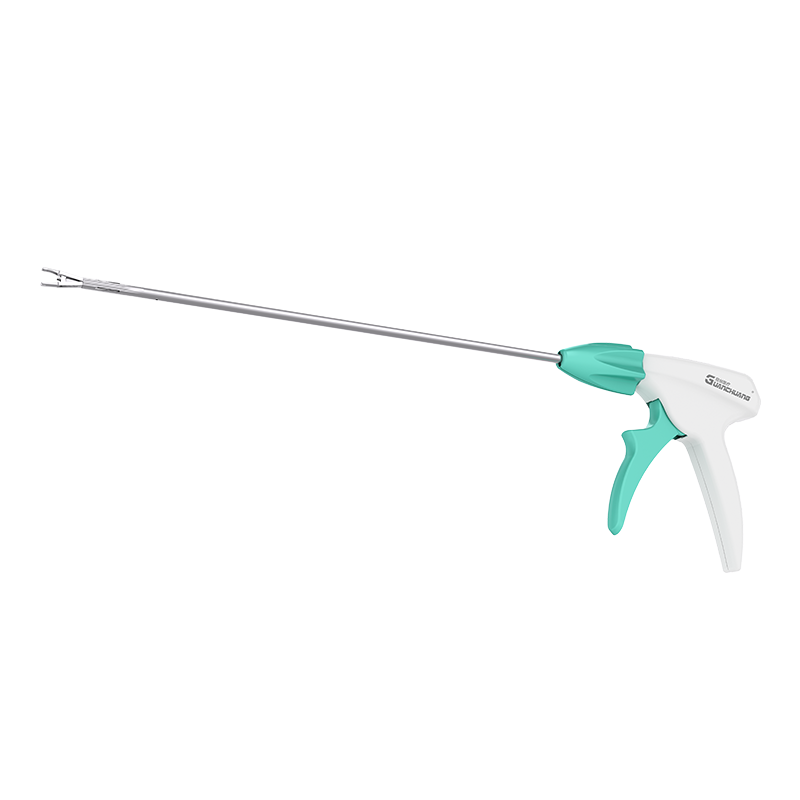
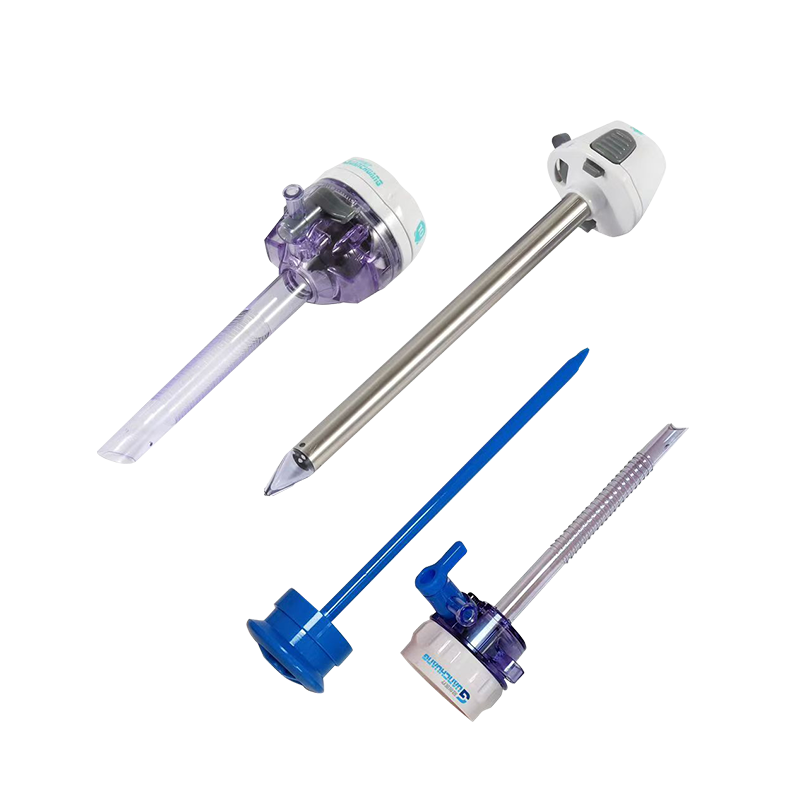
Disposable non-absorbable closure clips are deployed using dedicated clip applier instruments — a category that has itself undergone a significant transition from reusable to disposable construction in most high-volume surgical centers. Disposable endoscopic laparoscopic instruments in the clip applier category offer the same core advantages as other single-use devices: guaranteed sterility at the point of use, elimination of instrument reprocessing cost and error, and assured mechanical performance on every case rather than the degraded performance that characterizes worn reusable appliers with loose jaw tolerances or fatigued spring mechanisms.
The base component of the closure clip assembly is dimensionally matched to the jaw profile of the compatible applier instrument, ensuring that the clip is held securely during positioning and released cleanly and completely during the deployment stroke. This dimensional compatibility between clip and applier is the foundation of reliable ligation — any mismatch between clip base geometry and applier jaw profile risks maldeployment, incomplete closure, or unintended clip release at a critical intraoperative moment. Clinicians and procurement teams specifying disposable non-absorbable closure clips should confirm compatibility with their facility's existing or planned clip applier instrument inventory to avoid interoperability issues that could compromise surgical safety and workflow efficiency.

- Quick Links
- About Us
- Quality
- Service
- News
- Contact us
- Our Product
- Disposable Endoscopic Laparoscopic Instruments
- Disposable Wound Closure
- Thoracic Surgery Instruments
- Electrosurgery Instruments
- Open Surgical Instruments
- Urinary Anorectal Surgery Instruments
- Gastroenterology Surgical Instruments
- Medical Auxiliary Equipment
- Blood Preparation Device
- Contact us
- Tel:+86-519-69878833
- Phone:+86-13584319056
- E-mail:[email protected]
- Address:Building 2D, 2C and 3C, Wujin Sci-tech Pioneer Park, No. 256 Middle Mingxin Road, Hutang Town, Wujin District, Changzhou, 213164 Jiangsu P.R. China

