


 English
  Español
  اللغة العربية
  Russian
  Português
  Français
  ภาษาไทย
Industry News
What Are the Key Differences Between Standard and Robotic Laparoscopic Instruments?
Content
- 1 The Foundation: What Laparoscopic Instruments Are Designed to Do
- 2 Design and Mechanical Architecture of Standard Laparoscopic Instruments
- 3 How Robotic Laparoscopic Instruments Differ in Fundamental Design
- 4 Tactile Feedback: A Critical Difference Between Instrument Types
- 5 Instrument Range, Compatibility, and Sterilisation Considerations
- 6 Side-by-Side Comparison of Key Instrument Characteristics
- 7 Clinical Scenarios Where Each Instrument Type Has the Advantage
- 8 The Emerging Middle Ground: Articulating Standard Laparoscopic Instruments
The Foundation: What Laparoscopic Instruments Are Designed to Do
Laparoscopic instruments are the specialised surgical tools that allow surgeons to perform minimally invasive procedures through small incisions in the abdominal wall rather than the large openings required by open surgery. By introducing a camera and operating instruments through ports typically ranging from 5 mm to 12 mm in diameter, laparoscopic surgery dramatically reduces patient trauma, shortens hospital stays, lowers infection risk, and accelerates recovery compared to conventional open procedures. The instruments themselves must achieve the same functional objectives as their open surgery counterparts — grasping, cutting, dissecting, coagulating, suturing, and retracting tissue — but within the geometric and ergonomic constraints imposed by operating through narrow cylindrical trocars at distances of 20 to 40 centimetres from the target anatomy. This fundamental challenge of performing precise, force-sensitive manipulation through a long, rigid shaft has shaped the design of laparoscopic instruments for four decades, and it is the same challenge that robotic platforms have attempted to solve through a fundamentally different engineering approach.
Design and Mechanical Architecture of Standard Laparoscopic Instruments
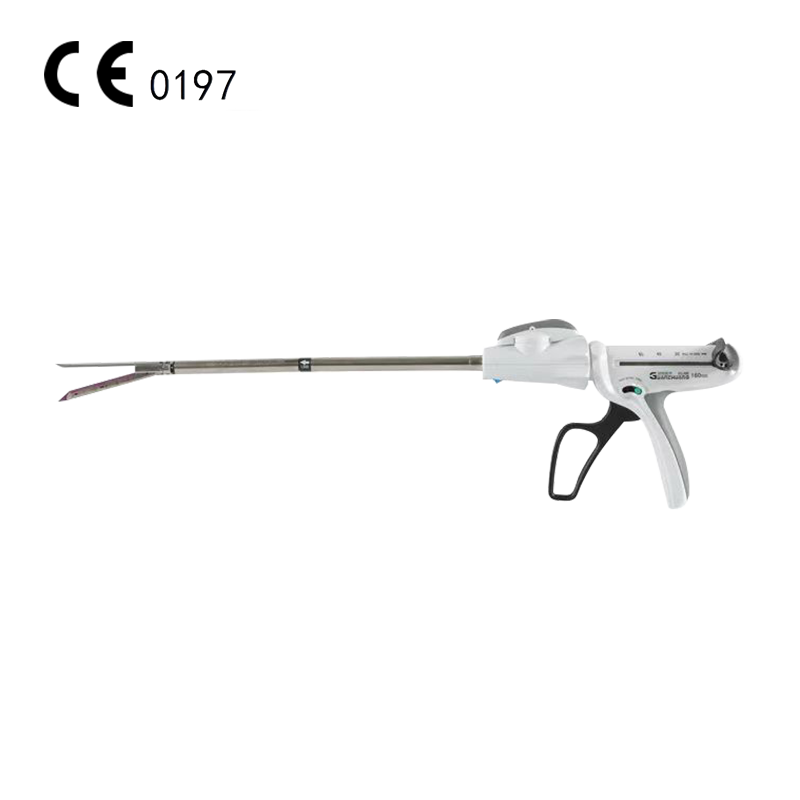
Standard laparoscopic instruments share a consistent architectural template regardless of their specific function. Each instrument consists of a handle assembly at the proximal end, a rigid shaft of fixed length — typically 330 mm or 430 mm for abdominal procedures — and a working tip at the distal end that performs the actual tissue interaction. The surgeon's hand movements at the handle are mechanically transmitted through the shaft to the tip via push rods, cables, or rotating shafts depending on the instrument type. Most standard laparoscopic instruments provide two degrees of freedom at the working tip: opening and closing of a jaw mechanism, and rotation of the entire shaft from the handle. All other directional movement of the instrument tip is achieved by pivoting the entire shaft around the fixed fulcrum point of the trocar in the abdominal wall.
This fulcrum effect is the defining constraint of standard laparoscopic instruments. Because the trocar acts as a pivot point, moving the handle to the left moves the instrument tip to the right, and vice versa — an inverted and counterintuitive motion that requires significant training and practice for surgeons to internalise. The fixed shaft length further constrains the working envelope, and the absence of articulation at the wrist means that certain anatomical angles — particularly those requiring the tip to approach tissue from an acute angle — are geometrically inaccessible without repositioning the trocar or using a different port site.
How Robotic Laparoscopic Instruments Differ in Fundamental Design
Robotic laparoscopic instruments introduce a wrist joint between the instrument shaft and the working tip that restores multiple additional degrees of freedom to the distal end of the instrument. The da Vinci Surgical System — the dominant robotic platform in clinical use — equips its EndoWrist instruments with a cable-driven wrist mechanism that provides seven degrees of freedom at the instrument tip, compared to the four available with standard laparoscopic instruments. This wrist articulation allows the instrument tip to bend through a range of approximately 90 degrees in multiple planes, enabling approaches to tissue that would be geometrically impossible with a straight rigid shaft.
The mechanical connection between the surgeon and the instrument tip is also fundamentally different in robotic laparoscopic instruments. Rather than the direct mechanical linkage of standard instruments, robotic instruments are driven by electromechanical actuators within the robotic arm that respond to inputs from the surgeon's hand controllers at a remote console. The control system interprets the surgeon's hand, wrist, and finger movements and translates them into corresponding movements of the instrument tip with the fulcrum effect computationally eliminated. The surgeon's movements feel intuitive because the instrument tip moves in the same direction as the hand, with the robotic system performing the mathematical transformation required to achieve this at the trocar fulcrum point.
Tactile Feedback: A Critical Difference Between Instrument Types
One of the most clinically significant differences between standard and robotic laparoscopic instruments is the presence or absence of tactile force feedback. Standard laparoscopic instruments transmit a degree of haptic information from the tissue to the surgeon's hand through the mechanical linkage of the instrument shaft, although this feedback is substantially attenuated and distorted compared to open surgery because of shaft friction, trocar resistance, and the lever mechanics of the fulcrum. Experienced laparoscopic surgeons develop a learned sensitivity to these attenuated cues over years of practice, allowing them to judge tissue tension, clip closure force, and suture tension with reasonable accuracy.
Current robotic laparoscopic instruments provide no haptic force feedback to the surgeon at the console. The electromechanical drive system that moves the instrument tip does not return force information to the hand controllers, meaning the surgeon must rely entirely on visual cues from the camera system to judge tissue behaviour, suture tension, and instrument-tissue interaction forces. This absence of haptic feedback is widely cited as the primary remaining limitation of current robotic laparoscopic instrument technology, and multiple research programs and commercial ventures are actively working on force-feedback-enabled robotic instruments, though none have achieved widespread clinical deployment as of 2026.
Instrument Range, Compatibility, and Sterilisation Considerations
The range of instrument types available differs substantially between standard and robotic laparoscopic platforms. Standard laparoscopic instruments encompass an enormous variety of tools produced by multiple competing manufacturers, all compatible with standard 5 mm and 10–12 mm trocars. The breadth of the standard instrument ecosystem includes:
- Atraumatic and traumatic graspers in multiple jaw configurations for tissue manipulation without or with tissue purchase respectively
- Scissors in straight, curved, and hook configurations for sharp dissection and tissue division
- Monopolar and bipolar electrosurgical instruments for haemostasis and tissue sealing
- Clip appliers for vessel and duct ligation, needle drivers for intracorporeal suturing, and irrigation-suction devices
- Specialised retractors, fan retractors, and liver retractors for organ displacement and exposure
Robotic laparoscopic instruments are proprietary to their respective robotic platforms and cannot be interchanged across systems. The da Vinci instrument range covers the core functional categories but with a narrower selection than the open market for standard laparoscopic instruments. Robotic instruments are also subject to usage limitations imposed by the manufacturer — da Vinci EndoWrist instruments are programmed to disable after a set number of uses, typically 10 to 20 depending on the instrument type, regardless of actual wear condition. This enforced disposability has significant cost implications compared to standard laparoscopic instruments, many of which are designed for repeated reprocessing and sterilisation over hundreds of use cycles.
Side-by-Side Comparison of Key Instrument Characteristics
The table below provides a structured comparison of the principal characteristics of standard and robotic laparoscopic instruments across the dimensions most relevant to clinical and operational decision-making:
| Characteristic | Standard Laparoscopic Instruments | Robotic Laparoscopic Instruments |
| Degrees of freedom at tip | 4 | 7 |
| Wrist articulation | None (rigid shaft) | Full multi-plane articulation |
| Haptic force feedback | Attenuated but present | Absent in current systems |
| Tremor filtering | None | Electronic tremor filtration |
| Motion scaling | 1:1 (no scaling) | Adjustable (up to 5:1 reduction) |
| Manufacturer compatibility | Multi-vendor open market | Platform-proprietary only |
| Reprocessing cycles | Hundreds (reusable designs) | 10–20 uses (programmed limit) |
| Per-procedure instrument cost | Low to moderate | Significantly higher |
| Learning curve | Substantial (fulcrum effect) | Shorter for fine manipulation |
Clinical Scenarios Where Each Instrument Type Has the Advantage
The choice between standard and robotic laparoscopic instruments is not a straightforward contest with a single winner. Each approach has distinct advantages that make it better suited to particular clinical scenarios, patient anatomies, and procedural complexity levels.
Where Standard Laparoscopic Instruments Excel
Standard laparoscopic instruments remain the preferred choice for high-volume, relatively straightforward procedures where the learning curve has been mastered and operative efficiency is the primary priority. Laparoscopic cholecystectomy, appendicectomy, diagnostic laparoscopy, and straightforward hernia repairs can be performed with standard laparoscopic instruments by experienced surgeons with operative times and outcomes that equal or exceed robotic approaches, at a fraction of the per-procedure cost. The tactile feedback available through standard instruments — even in its attenuated form — is genuinely valued by experienced laparoscopic surgeons for procedures requiring delicate tissue handling, such as bowel anastomosis where over-tightening of sutures carries significant clinical risk.
Where Robotic Laparoscopic Instruments Demonstrate Superior Performance
Robotic laparoscopic instruments deliver their most compelling clinical advantages in procedures requiring fine manipulation in anatomically confined spaces, precise dissection near critical structures, or complex intracorporeal suturing. Radical prostatectomy in the pelvis, partial nephrectomy with renal reconstruction, rectal cancer resection in the narrow male pelvis, and Whipple procedures requiring pancreatic-enteric anastomosis are all procedures where the articulated wrist, tremor filtration, and motion scaling of robotic laparoscopic instruments translate into measurable clinical benefits — reduced positive surgical margins, lower conversion rates to open surgery, and more consistent anastomotic outcomes. The robotic platform also reduces surgeon physical fatigue in long complex procedures, a factor with meaningful implications for patient safety in procedures exceeding four to six hours.
The Emerging Middle Ground: Articulating Standard Laparoscopic Instruments
A growing category of laparoscopic instruments occupies the space between standard rigid-shaft tools and fully robotic systems. Manually articulating laparoscopic instruments — such as the Cambridge Endo articulating instruments, the Autonomy Laparo-Angle series, and similar products from multiple manufacturers — incorporate a manually controlled wrist joint into a standard instrument handle design that does not require a robotic platform. These instruments provide one to two planes of tip articulation controlled by a thumb lever or trigger mechanism on the handle, expanding the working envelope of standard laparoscopic instruments without the capital investment, maintenance requirements, or per-procedure cost of a robotic system. While they do not replicate the full seven degrees of freedom of robotic laparoscopic instruments or provide tremor filtration, they address the most common limitation of standard instruments — the inability to approach tissue at acute angles — and are compatible with any standard trocar and laparoscopic tower setup. As this category matures and product designs improve, articulating standard laparoscopic instruments are likely to capture an increasing share of procedures that currently sit in the grey zone between standard and robotic approaches.



- Quick Links
- About Us
- Quality
- Service
- News
- Contact us
- Our Product
- Disposable Endoscopic Laparoscopic Instruments
- Disposable Wound Closure
- Thoracic Surgery Instruments
- Electrosurgery Instruments
- Open Surgical Instruments
- Urinary Anorectal Surgery Instruments
- Gastroenterology Surgical Instruments
- Medical Auxiliary Equipment
- Blood Preparation Device
- Contact us
- Tel:+86-519-69878833
- Phone:+86-13584319056
- E-mail:[email protected]
- Address:Building 2D, 2C and 3C, Wujin Sci-tech Pioneer Park, No. 256 Middle Mingxin Road, Hutang Town, Wujin District, Changzhou, 213164 Jiangsu P.R. China

