


 English
  Español
  اللغة العربية
  Russian
  Português
  Français
  ภาษาไทย
Industry News
What Are Abdominal Surgical Clips?
Abdominal surgical clips are small, precision-engineered fastening devices used during minimally invasive and open abdominal procedures to occlude, ligate, or mark tubular anatomical structures such as blood vessels, bile ducts, and the cystic duct. Unlike sutures, these clips offer a significantly faster method of closure that reduces operative time and minimizes the risk of bleeding or leakage. Once applied, the closed clip is not removed after the operation, remaining permanently in place as a reliable long-term seal. Their introduction into modern surgical practice has dramatically improved the efficiency and safety of procedures ranging from cholecystectomy to colectomy.
These clips are specifically designed to be suitable for closed tubular organizational structures. The clamping device functions as a conveying device with a closed clamp, ensuring that the clip locks around the target tissue with precision and consistency. This mechanical reliability is essential in environments where even a fraction of a millimeter of misalignment can lead to serious complications.
Content
Role in Disposable Endoscopic Laparoscopic Instruments
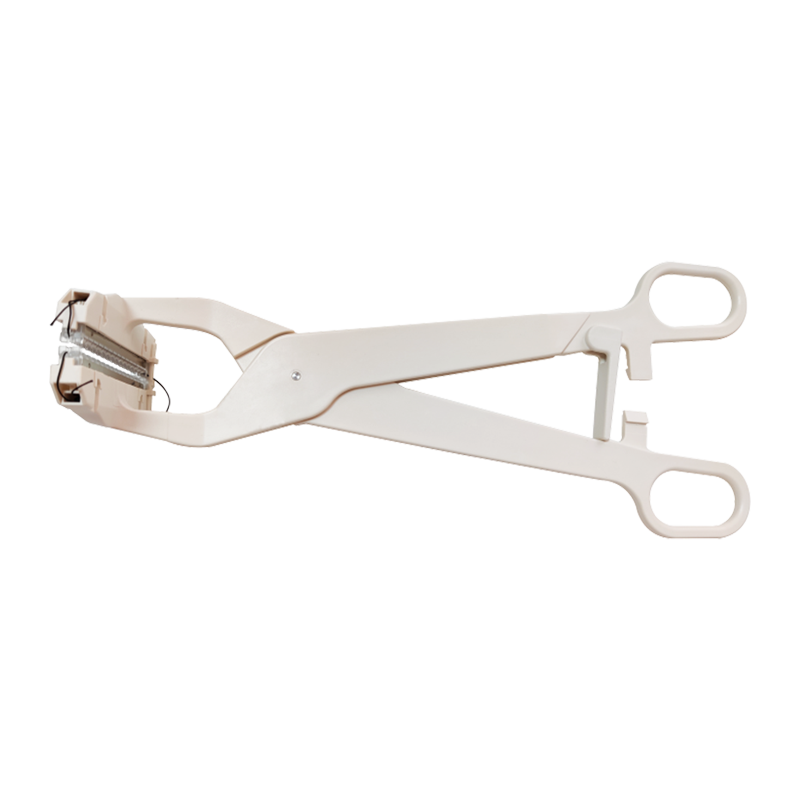
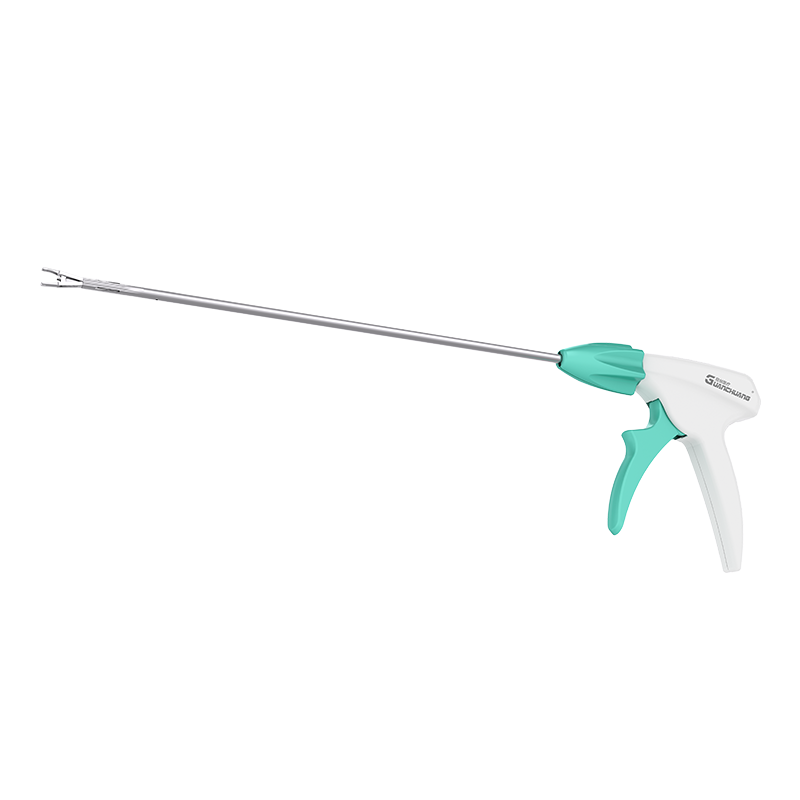
The integration of abdominal surgical clips into disposable endoscopic laparoscopic instruments has transformed minimally invasive surgery. Laparoscopic procedures require tools that are compact, precisely controllable through small port incisions, and capable of operating deep within the abdominal cavity with limited tactile feedback. Clip appliers designed for laparoscopic use are engineered to meet these demands, delivering consistent clip deployment through a slim, ergonomic shaft that can be maneuvered through a standard trocar.
Disposable instruments eliminate the risk of cross-contamination between patients, removing the need for time-consuming sterilization cycles and reducing hospital-acquired infection rates. Each unit arrives pre-loaded, pre-sterilized, and ready for immediate use, which streamlines the surgical workflow and reduces preparation errors. For high-volume surgical centers, the adoption of single-use laparoscopic clip appliers represents both a patient safety improvement and an operational efficiency gain.
Key Performance Features
Modern abdominal surgical clips and their delivery instruments are built around a set of critical performance standards that directly impact surgical outcomes. Understanding these features helps surgeons, procurement teams, and clinical engineers make informed decisions when selecting the right product for specific procedures.
Imaging Compatibility
One of the most clinically significant attributes of contemporary surgical clips is that they do not affect imaging examinations such as X-rays, CT scans, and MRI. Because the closed clip is not removed after the operation, patients will carry these implants indefinitely. Imaging compatibility ensures that future diagnostic evaluations are not compromised by artifact interference, allowing radiologists and clinicians to accurately interpret postoperative images without confusion or misdiagnosis. This property is especially critical for oncology patients who require frequent follow-up imaging.
Safety Lock and Anti-Slip Design
A well-engineered safety lock mechanism prevents accidental premature deployment during instrument insertion and positioning. The arc-shaped, elastic, and anti-slip design ensures that once a clip is applied, it grips the tissue firmly without migrating or loosening over time. The arc geometry conforms naturally to the rounded profile of vessels and ducts, distributing clamping force evenly across the tissue surface and reducing the likelihood of cut-through or tissue necrosis. The elastic component allows a degree of accommodation for tissue edema while maintaining a secure seal.
Speed and Reliability of Intraoperative Ligation
Intraoperative ligation is fast, safe, and reliable with clip-based systems compared to traditional suture ligation. The one-handed deployment mechanism of modern laparoscopic clip appliers allows the surgeon to apply a clip and advance to the next clip with minimal hand repositioning, significantly reducing the time spent on each ligation step. Faster ligation translates to shorter anesthesia time, reduced blood loss, and lower overall operative risk for the patient.
Lock Release Device
The inclusion of a lock release device in advanced clip appliers provides surgeons with greater control during complex dissections. This feature allows the instrument to be repositioned or the clip to be realigned before final deployment, reducing the chance of misapplication. In laparoscopic environments where direct manual correction is impossible, this capability is invaluable for achieving precise placement on the first attempt.
Available Models and Specifications
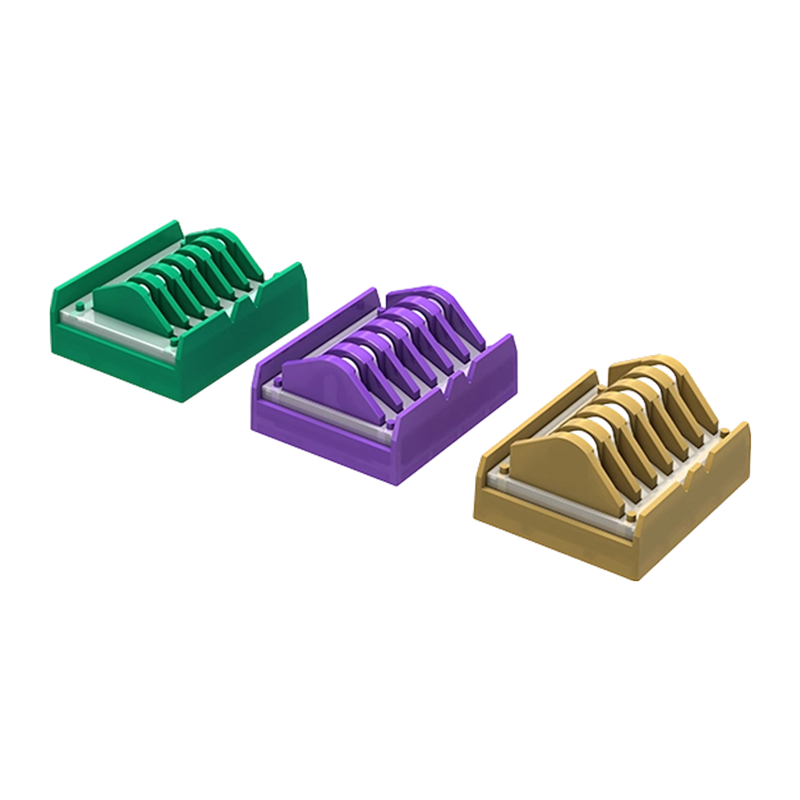
Various models and specifications are available to meet all kinds of intraoperative ligation requirements. Clip size must be matched to the diameter and wall thickness of the target structure. Using an undersized clip on a large vessel can result in incomplete occlusion, while an oversized clip on a delicate duct may cause unnecessary tissue trauma. The table below outlines common clip size categories and their typical clinical applications:
| Clip Size | Jaw Opening Range | Typical Application |
| Small | Up to 7 mm | Cystic duct, small arteries |
| Medium | 7 – 11 mm | Hepatic artery branches, bile ducts |
| Medium-Large | 11 – 14 mm | Renal vessels, colonic mesentery |
| Large | 14 mm and above | Major abdominal vessels, thick pedicles |
Instrument shaft lengths also vary to accommodate different patient anatomies and procedural approaches, with standard laparoscopic lengths typically ranging from 330 mm to 450 mm. Surgeons performing bariatric or deep pelvic procedures may require extended-length instruments to maintain ergonomic control through the abdominal wall.
Clinical Advantages Over Traditional Ligation Methods
Comparing abdominal surgical clips with conventional suture ligation highlights several practical advantages that have driven widespread adoption across surgical specialties:
- Time efficiency: Clip application takes seconds per vessel compared to minutes for hand-tied sutures, directly reducing operative duration.
- Consistent closure force: Mechanical delivery ensures uniform clamping pressure regardless of surgeon experience level, reducing variability in outcomes.
- Reduced tissue handling: Minimal manipulation of surrounding tissue lowers the risk of inadvertent injury to adjacent structures.
- Clear visualization: The clip's metallic or polymer body provides a visible landmark during dissection and postoperative imaging review.
- Compatibility with robotic platforms: Many clip applier designs are compatible with robotic-assisted laparoscopic systems, supporting adoption in advanced surgical environments.
Proper Usage Guidelines for Optimal Results
To achieve the best outcomes with abdominal surgical clips deployed through disposable endoscopic laparoscopic instruments, surgical teams should follow established best practices. These guidelines help maximize the mechanical performance of the clip and reduce the risk of postoperative complications such as clip migration or bile leak.
- Ensure the target structure is fully dissected and isolated before clip application to avoid incorporating adjacent tissue.
- Select the appropriate clip size based on the measured outer diameter of the structure; the clip jaw should fully encircle the tissue without overlap or gap.
- Apply a minimum of two clips on the proximal side and one on the distal side of any structure to be divided, following standard double-clip proximal protocol.
- Verify clip closure visually through the laparoscope before releasing the instrument.
- Use the lock release device to reposition the instrument if initial placement appears suboptimal before completing deployment.
- Dispose of the single-use instrument immediately after the procedure in accordance with local medical waste regulations.
Selecting the Right Product for Your Surgical Program
When evaluating abdominal surgical clips and disposable endoscopic laparoscopic instruments for institutional procurement, clinical committees should assess several dimensions beyond basic clip size. Ergonomic handle design affects surgeon fatigue during lengthy procedures. The number of pre-loaded clips per instrument impacts workflow during multi-vessel dissections. Material composition determines MRI artifact profile and long-term biocompatibility. Regulatory certification — including CE marking and FDA clearance — confirms that the product meets internationally recognized safety and performance benchmarks.
Engaging with clinical evidence, including peer-reviewed comparative studies and post-market surveillance data, allows procurement teams to differentiate between products with similar specifications but varying real-world performance records. Piloting a new clip system in a controlled setting before full adoption allows surgical staff to develop familiarity with the instrument's tactile response and deployment characteristics, ensuring seamless integration into existing operative protocols.


- Quick Links
- About Us
- Quality
- Service
- News
- Contact us
- Our Product
- Disposable Endoscopic Laparoscopic Instruments
- Disposable Wound Closure
- Thoracic Surgery Instruments
- Electrosurgery Instruments
- Open Surgical Instruments
- Urinary Anorectal Surgery Instruments
- Gastroenterology Surgical Instruments
- Medical Auxiliary Equipment
- Blood Preparation Device
- Contact us
- Tel:+86-519-69878833
- Phone:+86-13584319056
- E-mail:[email protected]
- Address:Building 2D, 2C and 3C, Wujin Sci-tech Pioneer Park, No. 256 Middle Mingxin Road, Hutang Town, Wujin District, Changzhou, 213164 Jiangsu P.R. China

