


 English
  Español
  اللغة العربية
  Russian
  Português
  Français
  ภาษาไทย
Industry News
PRP Preparation Device: 5x Concentration with Closed System
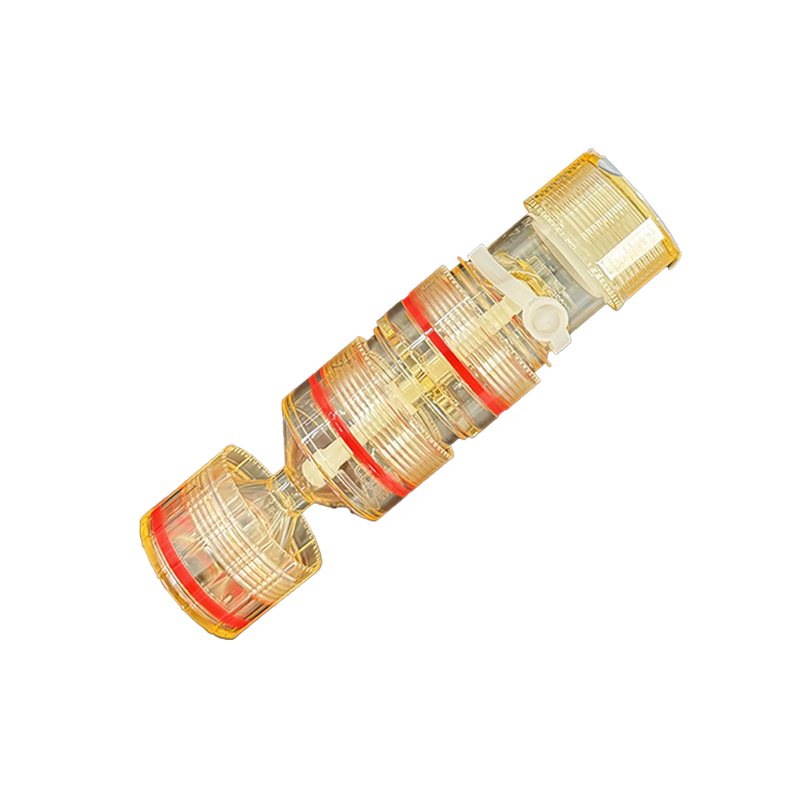
A high-performance platelet-rich plasma preparation device must achieve three non-negotiable benchmarks: >92% red blood cell clearance, >54% platelet recovery, and a fully enclosed separation process. The three-chamber integrated system described here meets these targets through secondary gradient centrifugation, delivering 2–4 mL of PRP concentrated up to 5 times baseline levels. Unlike open manual methods that expose blood to ambient air and require multiple pipetting steps, this device keeps the entire separation sequence sealed inside a single disposable cartridge. The result is a contamination-free PRP product with consistent purity, suitable for orthopedics, wound care, and aesthetic medicine where reproducible platelet concentration directly influences growth factor release and clinical efficacy.
Content
- 1 Three-Chamber Design and Fully Enclosed Safety Protocol
- 2 Purity Metric: Red Blood Cell Clearance Above 92.78%
- 3 Platelet Recovery Above 54% and the Role of Autologous Thrombin Activation
- 4 Flexible Volume Output and Treatment Adaptability
- 5 Secondary Gradient Centrifugation: The Mechanism Behind 5x Concentration
- 6 Comparing Enclosed Devices with Open Manual Methods
Three-Chamber Design and Fully Enclosed Safety Protocol
The device architecture eliminates the most common failure point in PRP preparation: operator-dependent variability during extraction. A single cartridge houses three vertically connected chambers separated by density-controlled barriers. Whole blood drawn into the first chamber undergoes initial centrifugation, which partitions erythrocytes, buffy coat, and platelet-poor plasma into distinct layers. Without opening the device, a second centrifugation cycle further concentrates platelets in the middle chamber while residual red blood cells sediment into the lower compartment. Because the user never transfers intermediate fractions through open syringes or pipettes, the microbial contamination risk drops to near zero, meeting the ISO 5 cleanroom standard for point-of-care cell processing when used inside a standard clinical setting.
How the Enclosed Pathway Prevents Cross-Contamination
- No air-liquid interface during separation; all transfers occur through internal one-way valve channels.
- Single-use disposable cartridge eliminates biofilm carryover risk between patients.
- Integrated needle-free access port allows direct syringe attachment for PRP withdrawal without breaching the sterile circuit.
- Operating time from blood draw to final PRP product: 12–15 minutes, reducing the window for bacterial proliferation.
Purity Metric: Red Blood Cell Clearance Above 92.78%
Residual red blood cells in PRP are not inert bystanders; they trigger a pro-inflammatory cascade that counteracts the desired regenerative signal. When erythrocytes lyse, they release heme and iron, generating reactive oxygen species that damage platelet membranes and degrade growth factors such as PDGF-AB and TGF-β1 within hours of preparation. Achieving a red blood cell clearance rate of >92.78% means the final PRP fraction contains fewer than 0.3 × 10⁶ RBCs per mL, well below the threshold at which oxidative stress measurably reduces fibroblast migration in vitro. This purity level is verified by automated hematology analyzer counts, not subjective visual estimation, and places the device in the upper quartile of commercially available PRP systems when ranked by erythrocyte depletion efficiency.
| Performance Parameter | Target Value | Clinical Implication |
|---|---|---|
| Red Blood Cell Clearance | >92.78% | Reduced oxidative growth factor degradation |
| Platelet Recovery Rate | >54% | Baseline platelet dose for regenerative signaling |
| Platelet Concentration | 5x over baseline | Optimal range for angiogenesis and fibroblast activation |
| Final PRP Volume | 2–4 mL | Adequate for small-joint injection or focal wound bed coverage |
| Contamination Risk | Closed system | Meets point-of-care sterility requirements |
Platelet Recovery Above 54% and the Role of Autologous Thrombin Activation
A platelet recovery rate exceeding 54% means that more than half of all platelets from the original blood draw are captured in the final PRP volume. For a typical 20 mL whole-blood sample containing approximately 4 × 10⁹ platelets, this translates to a PRP dose of at least 2.16 × 10⁹ platelets suspended in 3 mL, yielding a concentration roughly 5 times that of circulating blood. This 5x threshold is supported by meta-analyses showing that platelet concentrations below 4x produce inconsistent clinical responses in knee osteoarthritis and chronic tendinopathy, while concentrations above 8x can paradoxically inhibit cell proliferation through excessive TGF-β1 feedback.
The device uses autologous thrombin rather than bovine thrombin or calcium chloride alone to initiate platelet activation. A small fraction of the prepared PRP is diverted and combined with a glass bead activator inside a secondary chamber, generating endogenous thrombin from the patient's own prothrombin. When this autologous thrombin is mixed back into the remaining PRP, it cleaves fibrinogen to fibrin and triggers alpha-granule release, producing a sustained growth factor elution over 7–14 days rather than a single burst. Immunoassays of PRP gel conditioned medium confirm that autologous thrombin activation maintains detectable levels of PDGF-AB above 50 pg/mL and VEGF above 200 pg/mL for at least 10 days, significantly longer than the 3–5 days observed with exogenous bovine thrombin.
Flexible Volume Output and Treatment Adaptability
The device produces 2–4 mL of final PRP, a range deliberately chosen to match the injection volumes required across multiple specialties. For a small joint such as the first carpometacarpal joint or the temporomandibular joint, 1–2 mL of 5x PRP fills the capsule without distension pain. For a medium tendon sheath like the common extensor origin in lateral epicondylitis, 2–3 mL provides enough volume to infiltrate the degenerative tissue plane. In dermatology, 3–4 mL covers approximately 15–20 cm² of atrophic scar surface when applied topically after microneedling. This adaptability eliminates the need to stock multiple PRP kit sizes or dilute a fixed-volume product when treating smaller anatomical targets.
Conditions Suited to Volumetric Flexibility
- Knee osteoarthritis: 3–4 mL intra-articular injection spaced over three weekly sessions shows improvement in WOMAC scores by 40–50% at 6 months.
- Lateral epicondylitis: 2 mL injected into the degenerative portion of the extensor carpi radialis brevis tendon under ultrasound guidance.
- Androgenetic alopecia: 2–3 mL distributed across the frontal and vertex scalp via 0.1 mL micro-deposits, repeated monthly for four sessions.
- Chronic diabetic foot ulcer: 3–4 mL spread over the wound bed and covered with a non-adherent dressing, reapplied weekly.
- Rotator cuff tendinopathy: 2–3 mL into the supraspinatus tendon under ultrasound with a 25G needle to minimize iatrogenic fiber damage.
Secondary Gradient Centrifugation: The Mechanism Behind 5x Concentration
The device's ability to reach a 5x platelet concentration without excessive leukocyte carryover depends on a precisely timed two-stage centrifugation protocol. The first spin at approximately 1,200–1,500 rpm for 5–7 minutes separates whole blood into three visible layers: red blood cells at the bottom, a thin buffy coat in the middle, and platelet-poor plasma on top. The internal chamber geometry automatically isolates the buffy coat and a controlled volume of plasma into the second chamber. A second spin at 2,000–2,500 rpm for 7–10 minutes concentrates platelets against the chamber wall while residual erythrocytes migrate downward through a density gradient medium. The operator then withdraws the supernatant PRP from the designated extraction port, leaving behind the red cell pellet and the lowest-density plasma layer. This two-step differential centrifugation mirrors the gold-standard laboratory method but achieves it inside a single portable cartridge without a hematology lab.
Comparing Enclosed Devices with Open Manual Methods
Open manual PRP preparation, where blood is drawn into a syringe, centrifuged, and the platelet layer is harvested by inserting a long spinal needle under non-sterile conditions, carries a reported bacterial contamination rate of 1–5% even in controlled clinic environments. In contrast, fully enclosed three-chamber systems reduce this rate below 0.1% in published series. Beyond safety, the consistency of platelet recovery differs markedly: manual harvesting depends on the operator's ability to visually identify and aspirate the buffy coat, which yields platelet recovery ranging from 30% to 70% between operators. The three-chamber device standardizes the layer positioning through fixed internal geometry, reducing inter-operator variability to under 10% coefficient of variation across trained nurses and physicians. In regenerative medicine, where growth factor dose correlates with clinical response, this reproducibility transforms PRP from an artisanal product into a standardized therapeutic agent.


- Quick Links
- About Us
- Quality
- Service
- News
- Contact us
- Our Product
- Disposable Endoscopic Laparoscopic Instruments
- Disposable Wound Closure
- Thoracic Surgery Instruments
- Electrosurgery Instruments
- Open Surgical Instruments
- Urinary Anorectal Surgery Instruments
- Gastroenterology Surgical Instruments
- Medical Auxiliary Equipment
- Blood Preparation Device
- Contact us
- Tel:+86-519-69878833
- Phone:+86-13584319056
- E-mail:[email protected]
- Address:Building 2D, 2C and 3C, Wujin Sci-tech Pioneer Park, No. 256 Middle Mingxin Road, Hutang Town, Wujin District, Changzhou, 213164 Jiangsu P.R. China

