


 English
  Español
  اللغة العربية
  Russian
  Português
  Français
  ภาษาไทย
Industry News
Disposable Suction Irrigation Electrode: Functions & Clinical Use
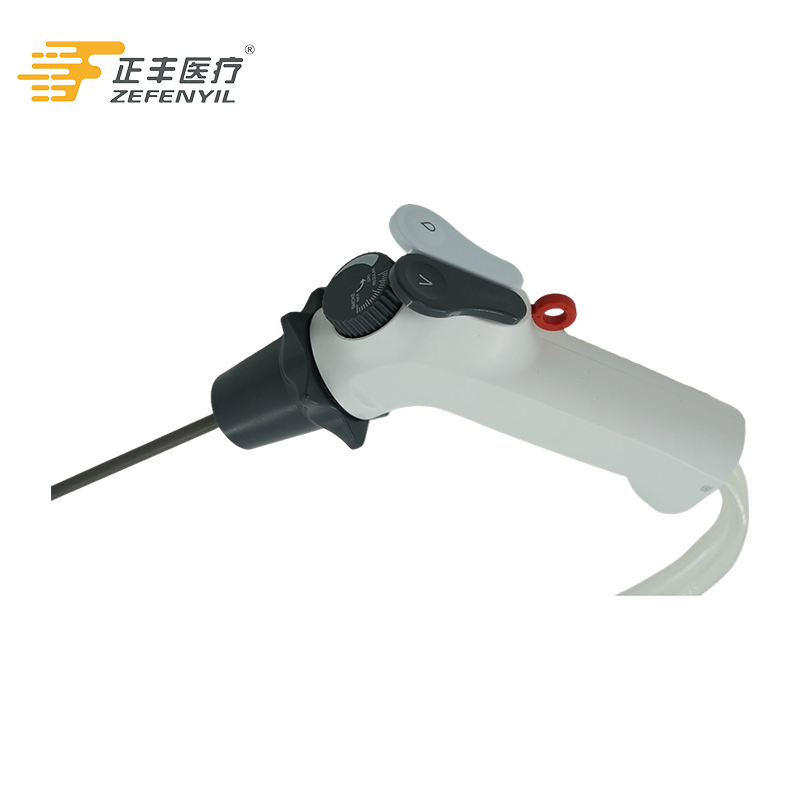
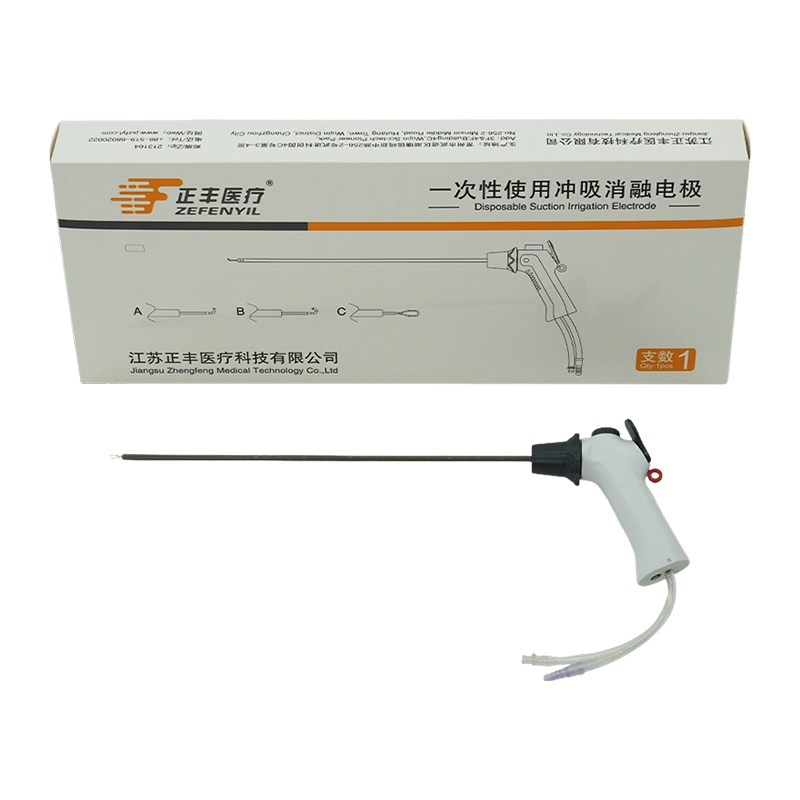
The disposable suction irrigation electrode is a single-use multifunctional surgical instrument that combines monopolar electrosurgery, simultaneous fluid irrigation, and continuous smoke evacuation within one handheld device. By integrating three core functions into a single barrel-like body with a rotating head and finger-controlled buttons, it eliminates the need to switch between separate tools. When connected to a standard high-frequency generator and a hospital suction system, the electrode allows a surgeon to cut tissue with high-frequency current, flush the operative field with saline, and instantly suction away blood, debris, and surgical smoke plume—all without removing the tip from the surgical site. This integration shortens the critical instrument-exchange interval by an average of 7–12 seconds per cycle, helping maintain a clear visual field and reducing total anesthesia time during prolonged laparoscopic or open procedures.
Content
- 1 Core Functional Modules and Their Clinical Logic
- 2 Component Design and Ergonomic Efficiency
- 3 Tissue Effects: Scraping, Electrocutting, and Coagulation Precision
- 4 Clinical Settings Where a Disposable Electrode Is Preferred
- 5 Selection and Compatibility Checklist
- 6 Advantages Over Reusable and Non-Integrated Devices
Core Functional Modules and Their Clinical Logic
The device is constructed around four interconnected pathways housed in a single shaft: a monopolar current loop, a suction channel, a flushing lumen, and a smoke evacuation pipe. Each is controlled by a dedicated button or connector near the handle, allowing the surgeon to activate or interrupt function instantly with one hand.
Monopolar Cutting and Coagulation Circuit
The electrosurgical head assembly, typically a blade or ball tip, delivers high-frequency alternating current (usually 300–500 kHz) to target tissue. The current returns via a patient grounding pad. In cutting mode, a continuous low-voltage waveform vaporizes cells in contact, producing a clean incision with minimal lateral thermal spread—often limited to 0.1–0.3 mm when using modern isolated generators. In coagulation mode, an intermittent waveform desiccates tissue and seals small vessels up to 2–3 mm in diameter, reducing blood loss without requiring separate hemostatic clips. The electrode lock mechanism ensures the tip remains immobile during precise dissection.
Irrigation and Suction Integration
Two parallel tubes run through the barrel: one connects via the flushing connector to a pressurized saline bag or pump, the other leads through the suction connector to the wall vacuum system. Pressing the flushing button releases a metered jet of saline—typically 5–15 mL per activation—directly onto the tissue plane, cooling the tip and washing away charred debris that would otherwise adhere to the electrode and increase tissue impedance. The suction button simultaneously opens a negative-pressure channel (usually –400 to –600 mmHg) that extracts the mixed fluid and plume. This simultaneous fluid exchange keeps the surgical field optically clear and continuously removes the odorous, potentially virus-containing smoke aerosol, which studies have measured at concentrations of over 10⁶ particles/cm³ near the electrode tip.
Component Design and Ergonomic Efficiency
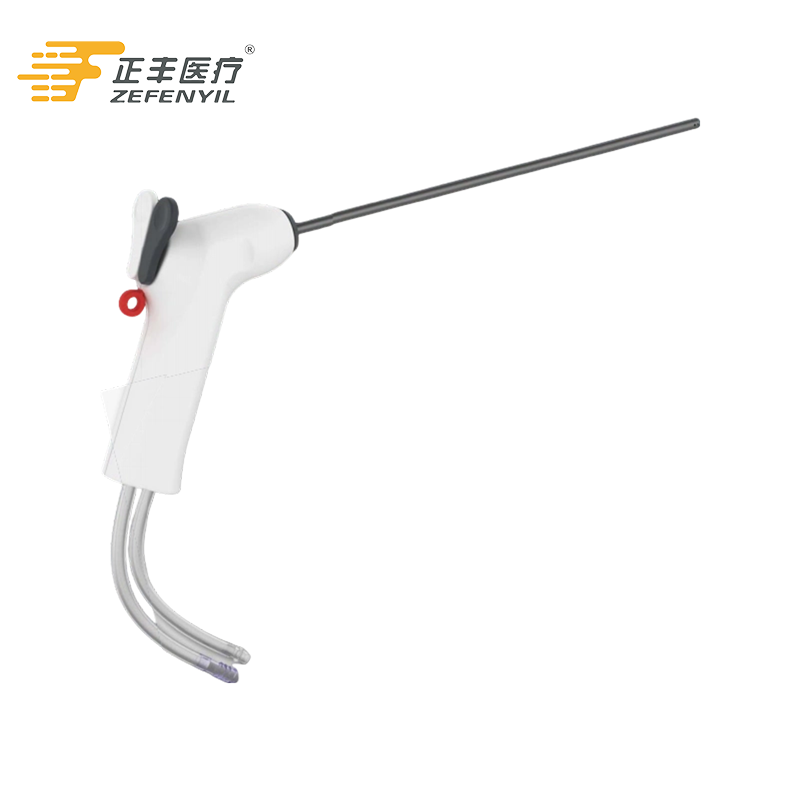
The device’s structural components directly serve intraoperative speed and accuracy. The rotating head allows the active electrode tip to pivot through 360 degrees without wrist strain, letting the surgeon approach tissue at the optimal angle while maintaining a neutral hand position. The knob, often placed at the rotation collar or the electrode lock base, enables quick tip changes or angular adjustments without requiring a second hand. The housing encapsulates insulated conductive pathways that meet dielectric strength requirements above 4 kV, while the outer barrel is textured to prevent finger slip even when coated with bodily fluids.
| Component | Primary Role | Clinical Benefit |
|---|---|---|
| Rotating Head | 360° tip articulation | Reduces wrist fatigue during angled dissection |
| Flushing Button | Saline jet activation | Cooling tip; clearing char adhesion instantly |
| Suction Button | Negative-pressure control | Removes smoke, blood, and fluid simultaneously |
| Electrode Lock | Secures active tip | Prevents tip wobble or unintended release |
| Suction/Flushing Connectors | Standardized tubing interfaces | Compatible with 6–8 mm tubing sets |
Tissue Effects: Scraping, Electrocutting, and Coagulation Precision
The device supports three distinct tissue manipulation modes. In electrocutting, the fine wire or blade electrode separates tissue with minimal necrosis, producing a wound-healing profile comparable to scalpel incision but with simultaneous hemostasis of capillaries. In coagulation, a broader ball or spatula tip desiccates parenchymal surfaces, useful for liver bed hemostasis or bleeding from ovarian cyst walls where precise point coagulation is less critical but broad field sealing is needed. The scraping function uses a blunt edge on the electrode combined with controlled irrigation to mechanically dislodge soft pathological deposits—such as inflammatory fibrin or partially necrotic tumor debris—while suction removes the loosened material. Histological examinations of tissue margins after such scraping show less than 0.5 mm of adjacent thermal artifact when the power is kept below 40 W in cut mode.
Clinical Settings Where a Disposable Electrode Is Preferred
Single-use suction irrigation electrodes are particularly valued in procedures with high infection risk or heavy biological debris load. In septic abdominal surgery, the disposable nature prevents biofilm carryover between patients; reusable metal suction-coagulation probes carry a documented reprocessing failure rate of up to 2–3% even under stringent protocols, which is unacceptable when enteric contents contaminate the field. In laparoscopic ovarian cystectomy, the integrated irrigation rapidly cools the ovarian stroma after coagulation, helping preserve follicle reserve. In transurethral resection of bladder tumors, the simultaneous suction draws out tissue chips while flushing maintains bladder distension, keeping the resection time within the recommended 60-minute safety window to limit electrolyte absorption. In ENT microsurgery, the smoke evacuation has been shown to reduce ambient particulate concentration by over 85% within 30 seconds of activation, protecting the surgical team from chronic plume exposure.
Selection and Compatibility Checklist
To ensure safe and effective use, match the device to the surgical setup with the following verifications:
- Confirm generator compatibility: the electrode should be rated for the specific high-frequency output waveform of the generator, typically 300–500 kHz isolated output.
- Check connector dimensions: suction and flushing connectors must match standard tubing diameters of 6 mm or 8 mm to avoid leakage under negative pressure.
- Verify flush volume per activation: choose models delivering 8–15 mL per button press for laparoscopic work, where excess fluid can obscure vision, and higher volume for open laparotomy.
- Assess tip options: ensure the selected electrode tip (blade, ball, hook, or spatula) matches the primary tissue manipulation task.
- Evaluate rotational resistance: a properly designed rotating head should move with less than 2 N·cm torque, allowing single-finger repositioning.
- Confirm sterility and packaging integrity: single-use devices must be individually pouched with ethylene oxide or gamma radiation sterilization indicators intact.
Advantages Over Reusable and Non-Integrated Devices
Compared to a reusable suction-coagulator set, the disposable version eliminates the labor and validation costs of cleaning narrow-lumen suction tubing, which can accumulate bioburden at internal dead spaces. A time-motion study in a general surgery unit found that setup and breakdown time dropped by 4–6 minutes per case when switching from reusable to disposable integrated electrodes, cumulatively recovering over 20 operating-room hours per service per month. Compared to non-integrated systems where a separate suction wand and electrosurgical pencil are used, the combined electrode reduces instrument crowding through the incision point and cuts the number of intraoperative instrument passes by roughly 20–30%, according to task-analysis studies in laparoscopic cholecystectomy. The smoke evacuation also relieves the need for a separate plume extraction wand, which is often neglected, leaving surgical teams exposed to mutagenic volatile organic compounds.


- Quick Links
- About Us
- Quality
- Service
- News
- Contact us
- Our Product
- Disposable Endoscopic Laparoscopic Instruments
- Disposable Wound Closure
- Thoracic Surgery Instruments
- Electrosurgery Instruments
- Open Surgical Instruments
- Urinary Anorectal Surgery Instruments
- Gastroenterology Surgical Instruments
- Medical Auxiliary Equipment
- Blood Preparation Device
- Contact us
- Tel:+86-519-69878833
- Phone:+86-13584319056
- E-mail:[email protected]
- Address:Building 2D, 2C and 3C, Wujin Sci-tech Pioneer Park, No. 256 Middle Mingxin Road, Hutang Town, Wujin District, Changzhou, 213164 Jiangsu P.R. China

