


 English
  Español
  اللغة العربية
  Russian
  Português
  Français
  ภาษาไทย
Industry News
How Medical Auxiliary Equipment Is Revolutionizing Patient Care?
Content
- 1 The Operational Role of Medical Auxiliary Equipment in Modern Clinics
- 2 Optimizing Clinical Workflows Through Strategic Support Devices
- 3 Enhancing Patient Comfort and Accelerating Recovery Timelines
- 4 Selecting and Integrating Auxiliary Tools from a Medical Supply Company
- 5
- 6 Maintenance Protocols and Lifecycle Management
The Operational Role of Medical Auxiliary Equipment in Modern Clinics
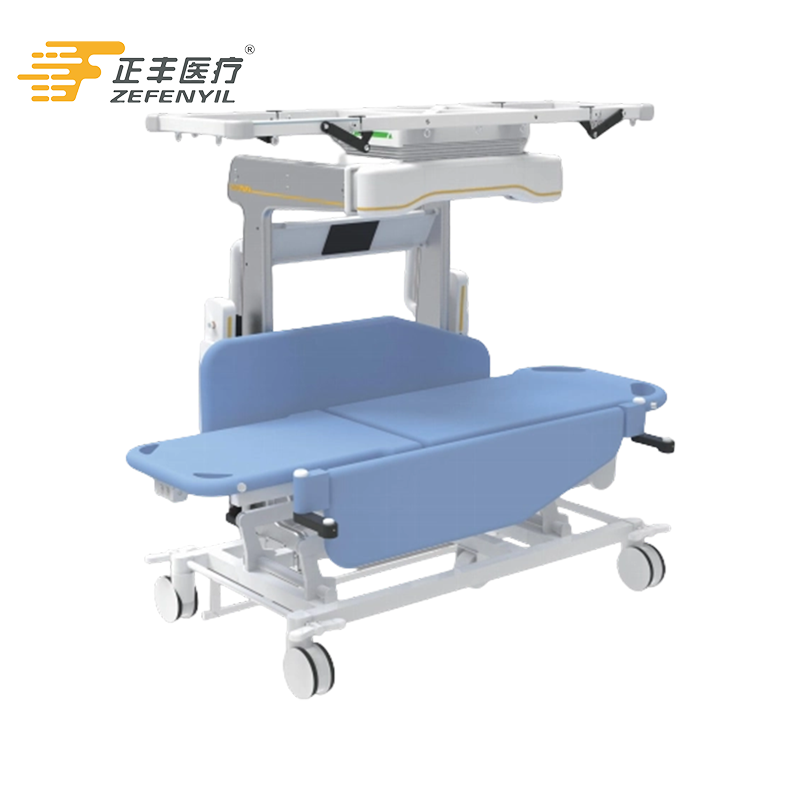
Healthcare delivery relies heavily on a layered ecosystem of tools that operate behind the scenes to sustain clinical momentum. While diagnostic imaging systems and surgical instruments receive the most attention for their direct therapeutic impact, Medical Auxiliary Equipment forms the foundational infrastructure that enables these primary devices to function at peak efficiency. These support systems encompass patient positioning aids, procedural trolleys, ergonomic transfer mechanisms, and environmental control units. They are specifically engineered to minimize procedural delays, reduce clinician physical strain, and maintain sterile fields during complex interventions. By integrating these auxiliary tools into daily clinical routines, healthcare facilities can transform fragmented workflows into synchronized operational pipelines that consistently deliver high-quality care.
The distinction between treatment-focused instruments and support-focused apparatus lies in their functional objectives. Primary devices administer therapy, extract physiological data, or perform invasive corrections. In contrast, auxiliary apparatuses manage the spatial, logistical, and environmental variables surrounding those interventions. For instance, a surgical lamp does not cut tissue, yet its precise illumination dictates surgical accuracy. Similarly, adjustable examination beds do not heal fractures, but their hydraulic positioning systems enable orthopedic specialists to achieve optimal alignment during casting. Understanding this operational hierarchy allows clinic administrators to allocate budgets strategically, ensuring that every procedural step is backed by purpose-built support infrastructure that eliminates bottlenecks and standardizes clinical excellence.
Optimizing Clinical Workflows Through Strategic Support Devices
Reducing Staff Fatigue with Ergonomic Transfer Aids
Manual patient handling represents one of the most significant sources of occupational injury in acute care environments. Repeated lifting, pivoting, and repositioning of immobile patients rapidly depletes clinical stamina, increasing the likelihood of musculoskeletal disorders among nursing staff and physical therapists. Ergonomic transfer aids, including ceiling-mounted track systems, low-friction slide sheets, and powered lateral transfer boards, systematically redistribute mechanical load away from human operators. When deployed correctly, these devices reduce the required lifting force by up to eighty percent, allowing caregivers to execute bed-to-chair transitions, radiology table shifts, and operating room transfers with controlled precision. The implementation of mechanical transfer protocols also standardizes movement patterns across departments, which directly correlates with reduced absenteeism, lower worker compensation claims, and sustained clinical staffing capacity during high-acuity patient surges.
Streamlining Documentation via Integrated Monitoring Stands
Contemporary clinical environments generate continuous streams of physiological data that require immediate visibility for rapid decision-making. Traditional wall-mounted monitors restrict clinician mobility and force practitioners to return to fixed stations to verify patient vitals. Integrated monitoring stands equipped with articulated articulating arms, cable management channels, and modular accessory trays resolve this spatial limitation. These mobile platforms consolidate vital sign displays, infusion pump interfaces, and electronic health record terminals into a single cohesive unit that moves seamlessly with the patient. By positioning critical information at eye level during rounds, medication administration, and bedside procedures, clinical teams eliminate redundant charting steps and reduce documentation lag time. This spatial optimization proves especially valuable in intensive care units and post-anesthesia recovery areas, where real-time data accessibility directly influences intervention timing and clinical outcomes.
Enhancing Patient Comfort and Accelerating Recovery Timelines
Positioning and Immobilization Tools for Therapeutic Alignment
Proper anatomical positioning is a non-negotiable prerequisite for effective therapeutic intervention, whether during physical rehabilitation, wound care, or respiratory management. Vacuum mattress systems, memory foam contouring wedges, and adjustable limb suspension devices provide customized support that maintains neutral joint alignment while preventing pressure ulcer development. These positioning instruments are constructed from medical-grade polyurethane and antimicrobial textiles that distribute body weight evenly, reduce shear forces, and facilitate targeted offloading of vulnerable tissue zones. When integrated into postoperative recovery protocols, these tools minimize involuntary patient movement that could disrupt surgical sites or compromise orthopedic hardware placement. Furthermore, consistent positioning reduces the physiological stress response, lowers analgesic requirements, and creates stable environmental conditions that accelerate tissue regeneration and functional mobility restoration.
Environmental Control Systems for Infection Prevention
Microbial contamination remains a persistent challenge in clinical settings, particularly within procedural suites and high-turnover examination rooms. Environmental control systems, including HEPA-filtered air purification units, ultraviolet-C surface sterilizers, and antimicrobial waste containment stations, operate continuously to suppress pathogen proliferation between patient visits. These auxiliary devices are strategically positioned to complement standard terminal cleaning protocols, targeting airborne particulates, high-touch surface zones, and fluid spill containment. By maintaining baseline environmental sterility, healthcare facilities reduce the transmission vectors for multidrug-resistant organisms and lower the incidence of healthcare-associated infections. The operational simplicity of these systems allows environmental services teams to execute rapid room turnover cycles without compromising decontamination standards, ultimately increasing daily patient throughput while safeguarding immunocompromised populations from secondary complications.
Selecting and Integrating Auxiliary Tools from a Medical Supply Company
Procuring support infrastructure requires a systematic evaluation framework that prioritizes clinical compatibility, durability, and service accessibility over initial purchase price. Facilities administrators must verify that each device complies with regional regulatory standards, carries appropriate electrical safety certifications, and utilizes materials compatible with institutional disinfectant protocols. Partnering with an established medical supply company ensures access to validated product portfolios, manufacturer-backed warranty coverage, and dedicated clinical education resources. These vendors typically conduct facility assessments to identify workflow inefficiencies, recommend equipment configurations that match departmental patient volumes, and establish preventive maintenance schedules that align with usage intensity. This consultative procurement model transforms isolated equipment purchases into integrated clinical solutions that scale alongside evolving departmental demands.
| Equipment Category | Primary Clinical Application | Key Material Specification | Recommended Maintenance Cycle |
| Hydraulic Transfer Lifts | Safe patient repositioning and bed-to-chair mobility | Stainless steel frame with powder-coated finish | Quarterly hydraulic seal inspection |
| Procedural Trolleys | Instrument organization and bedside supply access | Medical-grade ABS plastic with antimicrobial coating | Monthly wheel alignment and brake testing |
| Positioning Wedge Systems | Pressure redistribution and spinal alignment support | High-density viscoelastic foam with fluid-impermeable cover | Bi-annual structural integrity assessment |
Maintenance Protocols and Lifecycle Management
Sustaining operational readiness requires a disciplined approach to equipment upkeep that extends far beyond reactive repairs. Clinical engineering departments must implement predictive maintenance frameworks that track usage hours, identify component wear patterns, and schedule proactive replacements before critical failures occur. Standardized cleaning protocols must be documented, training must be competency-verified, and performance logs must be maintained for regulatory audits. The following operational principles ensure that support infrastructure remains reliable, safe, and clinically effective throughout its designated service life:
- Establish manufacturer-aligned inspection checklists that verify load-bearing integrity, electrical grounding continuity, and mechanical joint lubrication before each clinical shift.
- Deploy barcode or RFID tracking systems to monitor equipment location, assign usage accountability to specific departments, and automate service notification triggers based on utilization thresholds.
- Maintain a standardized inventory of replacement components, including casters, fasteners, upholstery covers, and hydraulic valves, to minimize downtime during routine servicing procedures.
- Conduct quarterly competency workshops that train nursing staff, technicians, and environmental services personnel on proper handling techniques, disinfection protocols, and early failure recognition signs.
The strategic integration of Medical Auxiliary Equipment represents a fundamental shift from reactive care delivery to proactive operational design. When clinical teams prioritize ergonomic support, environmental sterility, and workflow continuity, they create sustainable care environments that protect practitioner health, accelerate patient recovery, and optimize institutional resource allocation. By partnering with a qualified medical supply company, healthcare facilities gain access to engineered solutions, comprehensive lifecycle support, and evidence-based implementation strategies that transform standard clinical spaces into high-performance care delivery networks. The continuous refinement of these support systems ensures that every procedural environment operates at peak efficiency, ultimately elevating the standard of care across all patient touchpoints.

- Quick Links
- About Us
- Quality
- Service
- News
- Contact us
- Our Product
- Disposable Endoscopic Laparoscopic Instruments
- Disposable Wound Closure
- Thoracic Surgery Instruments
- Electrosurgery Instruments
- Open Surgical Instruments
- Urinary Anorectal Surgery Instruments
- Gastroenterology Surgical Instruments
- Medical Auxiliary Equipment
- Blood Preparation Device
- Contact us
- Tel:+86-519-69878833
- Phone:+86-13584319056
- E-mail:[email protected]
- Address:Building 2D, 2C and 3C, Wujin Sci-tech Pioneer Park, No. 256 Middle Mingxin Road, Hutang Town, Wujin District, Changzhou, 213164 Jiangsu P.R. China

