


 English
  Español
  اللغة العربية
  Russian
  Português
  Français
  ภาษาไทย
Industry News
How Disposable Endoscopic Specimen Retrieval Bags Improve Laparoscopic Surgery Safety?
Content
- 1 Clinical Purpose of the Endoscopic Specimen Retrieval Bag
- 2 Why Mechanical Performance Standards Matter in Retrieval Bag Design
- 3 Joint Integrity: The 20N Tensile Standard
- 4 Operational Tightness: Sleeve, Handle, and Opening Mechanism
- 5 Full Opening Requirement After Bag Release
- 6 Bag Tensile Strength: The 10N Rupture Resistance Standard
- 7 Sterilization Validation and Packaging Integrity
Clinical Purpose of the Endoscopic Specimen Retrieval Bag
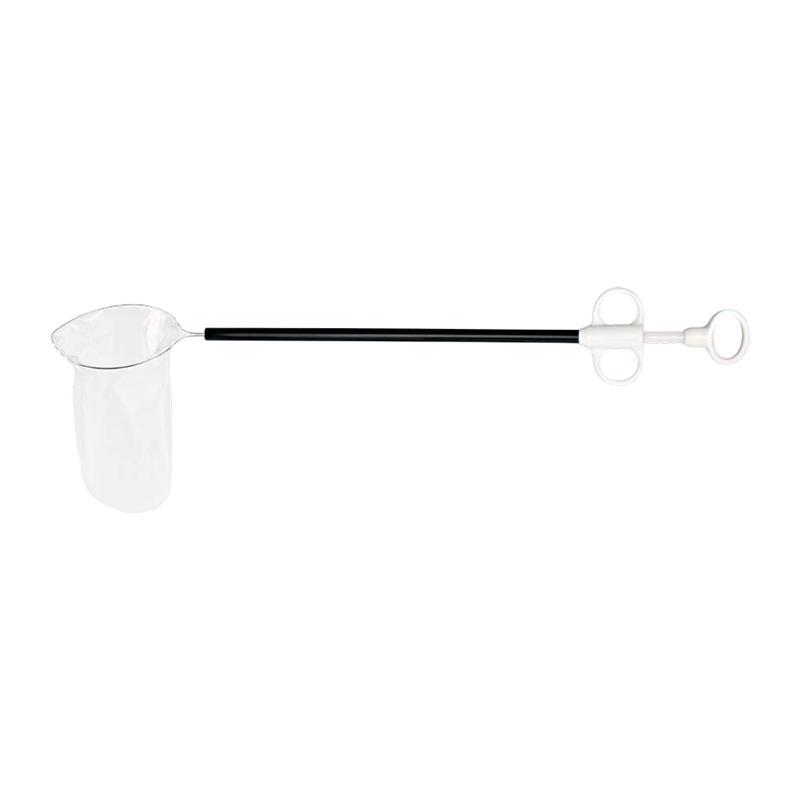
The endoscopic specimen retrieval bag is a purpose-built single-use device designed to collect and remove human tissue specimens and foreign bodies during minimally invasive endoscopic surgery. Its role in the surgical workflow is both protective and facilitative — it prevents direct contact between the excised specimen and the abdominal wall or trocar incision during extraction, while simultaneously allowing the surgeon to manage, orient, and seal the specimen entirely within the body cavity before removal begins. These two functions together address the primary intraoperative safety concerns associated with specimen extraction: infection transmission, malignant cell spillage, and tissue fragmentation.
As a category of disposable endoscopic laparoscopic instruments, the retrieval bag is subject to the same performance philosophy that governs all single-use surgical devices — consistent, validated performance at the moment of use, with no dependence on the condition or reprocessing history of the instrument. This is particularly important for a device whose primary function involves containing potentially infected, malignant, or cystic tissue. A retrieval bag that has been weakened by prior use, inadequately sterilized, or assembled with faulty joints represents a direct patient safety risk. The disposable format eliminates that risk category entirely by ensuring every device in clinical use is factory-sterile, mechanically intact, and unopened until the moment of deployment.
Why Mechanical Performance Standards Matter in Retrieval Bag Design
The operating environment of laparoscopic surgery places specific and demanding mechanical requirements on every instrument that enters the body cavity. The disposable retrieval bag must function reliably under conditions of limited visibility, constrained instrument range of motion, CO₂ pneumoperitoneum pressure, and the physical resistance of living tissue. A device that deploys incompletely, closes imprecisely, or ruptures under extraction force does not simply fail to perform its function — it actively creates the complications it was designed to prevent. For this reason, the mechanical performance criteria for retrieval bags are not aspirational design targets but mandatory minimum thresholds that every unit must meet before it reaches the operating room.
Each performance requirement addresses a specific failure mode that has been identified through clinical experience and engineering analysis. Taken together, they define the minimum acceptable mechanical integrity for a device that will be used in direct contact with resected human tissue inside a living body cavity. Understanding the rationale behind each requirement helps procurement professionals, surgical directors, and clinical engineers evaluate product quality beyond marketing claims and identify devices that have been genuinely engineered and tested to meet these standards.
Joint Integrity: The 20N Tensile Standard
All joints throughout the retrieval bag assembly — including the connections between the bag and its deployment cartridge, between the inner and outer sleeves, and between the handle components and the shaft — must be secure, free of looseness, and capable of withstanding a 20N tensile force without detachment or breakage. This requirement exists because every joint in the assembly is a potential failure point, and joint failure during surgery can have immediate and serious consequences.
A 20N tensile force corresponds approximately to the manual pulling force a surgeon applies when drawing the retrieval bag toward the abdominal wall during specimen extraction — particularly when the specimen is heavy, resistant, or requires repositioning. If a joint detaches under this load, the deployment cartridge may separate from the bag inside the body cavity, requiring additional instrumentation to retrieve both the specimen and the detached device component. The 20N standard provides a meaningful safety margin above typical operative forces while remaining achievable through robust assembly processes and appropriate material selection. Devices meeting this standard must demonstrate joint integrity not just in nominal testing conditions but across the full range of handle positions and loading angles encountered in clinical use.
Operational Tightness: Sleeve, Handle, and Opening Mechanism
The sleeve, handle, and bag opening mechanism of the disposable retrieval bag must be appropriately tight to facilitate safe and efficient surgical operation. This requirement addresses the tactile and mechanical control that surgeons depend on during single-handed device manipulation inside the body cavity. An excessively loose sleeve assembly allows unintended relative movement between the inner and outer components, which can cause premature bag deployment, partial opening, or loss of directional control during insertion. Conversely, a mechanism that is too stiff resists smooth actuation and requires excessive force that can destabilize the instrument's position within the port.
Appropriate tightness is therefore a calibrated design characteristic, not simply a material property. It reflects the precision of the manufacturing tolerances applied to the sliding surfaces between the inner and outer polycarbonate sleeves, the surface finish of those components, and the force profile engineered into the deployment mechanism. A well-designed retrieval bag delivers a smooth, progressive deployment feel with clear tactile feedback at the moment the bag is fully released — confirming to the surgeon, without visual confirmation, that deployment is complete and loading can begin.
Full Opening Requirement After Bag Release
After the bag is released from its deployment cartridge, the bag mouth must open fully and automatically, without additional manipulation by the surgeon. This requirement is enabled by the shape-memory behavior of the nitinol (Ti-Ni alloy) support ring embedded in the bag's opening structure. When compressed within the cartridge, the ring stores elastic energy. Upon release, it springs back to its pre-formed geometry — elliptical for Type A bags, circular for Type B — and holds the bag mouth open at its full specified diameter or axis length.
Incomplete opening is a clinically significant failure mode. A partially open bag cannot be loaded efficiently with laparoscopic graspers, requires the surgeon to spend additional time and instrument manipulation attempting to widen the opening, and creates risk that the specimen will be loaded against the partially folded bag wall rather than cleanly inside the open pouch. The full-opening requirement ensures that once deployed, the bag is immediately ready for specimen loading without any corrective action — a critical feature in procedures where operative time and precision are at a premium.
Bag Tensile Strength: The 10N Rupture Resistance Standard
The bag itself — fabricated from thermoplastic polyurethane (TPU) — must withstand a 10N tensile force without rupture or tearing. This standard applies to the bag body under the loading conditions of specimen extraction, including the stretching forces applied when a specimen partially resists entry into the bag, when the drawstring is cinched around a bulky specimen, and when the filled and sealed bag is pulled through or toward the abdominal wall incision.
TPU is selected as the bag material precisely because it combines high puncture resistance with significant elastic elongation before failure — it stretches under load rather than tearing abruptly. This characteristic means that even when the bag is stressed beyond its resting dimensions by an oversized or irregularly shaped specimen, it accommodates the load through controlled deformation rather than sudden rupture. The 10N standard defines the minimum force threshold for this performance, ensuring that the bag provides a meaningful safety margin above the forces encountered in standard clinical use.
Sterilization Validation and Packaging Integrity
After final assembly and packaging, every endoscopic specimen retrieval bag must be sterilized using a validated sterilization process to ensure sterility at the point of clinical use. Sterilization validation is not a one-time demonstration but an ongoing quality system requirement — the sterilization process must be characterized, documented, and periodically revalidated to confirm that it consistently achieves the required sterility assurance level (SAL) across the full range of devices in the production batch.
The following table summarizes all five mandatory performance requirements for the disposable retrieval bag, providing a reference overview for procurement evaluation and quality assessment:
| Performance Requirement | Specified Standard | Clinical Failure Risk if Not Met |
| Joint integrity (all assembly connections) | Withstand 20N tensile force without detachment or breakage | Device separation inside body cavity; additional retrieval required |
| Sleeve, handle, and opening mechanism tightness | Appropriately tight for controlled surgical operation | Premature deployment, loss of directional control, or actuation failure |
| Bag mouth opening after release | Must open fully and automatically upon deployment | Incomplete opening; delayed or failed specimen loading |
| Bag body tensile strength | Withstand 10N tensile force without rupture or tearing | Bag rupture; specimen spillage; infection or malignant cell dissemination |
| Sterility after final packaging | Validated sterilization process; sterile at point of use | Introduction of pathogens into sterile surgical field |
For surgical teams and procurement professionals evaluating disposable endoscopic laparoscopic instruments, these five criteria provide a concrete, testable framework for assessing product quality. Requesting test data, validation documentation, and regulatory clearance certificates against each of these standards — rather than relying on general claims of compliance — is the most reliable method for differentiating genuinely high-quality retrieval bags from products that meet only minimum regulatory filing requirements. A device that satisfies all five standards under realistic test conditions will perform predictably in clinical use, protect the patient from the complications that retrieval bag failures cause, and give the surgical team the confidence to focus on the procedure rather than the instrument.



- Quick Links
- About Us
- Quality
- Service
- News
- Contact us
- Our Product
- Disposable Endoscopic Laparoscopic Instruments
- Disposable Wound Closure
- Thoracic Surgery Instruments
- Electrosurgery Instruments
- Open Surgical Instruments
- Urinary Anorectal Surgery Instruments
- Gastroenterology Surgical Instruments
- Medical Auxiliary Equipment
- Blood Preparation Device
- Contact us
- Tel:+86-519-69878833
- Phone:+86-13584319056
- E-mail:[email protected]
- Address:Building 2D, 2C and 3C, Wujin Sci-tech Pioneer Park, No. 256 Middle Mingxin Road, Hutang Town, Wujin District, Changzhou, 213164 Jiangsu P.R. China

