


 English
  Español
  اللغة العربية
  Russian
  Português
  Français
  ภาษาไทย
Industry News
Disposable Circumcision Suture Device for Pediatric Circumcision | DCSD Guide
Content
Why Pediatric Circumcision Requires a Specialized Approach
Circumcision in children is not simply a scaled-down version of adult surgery. The pediatric foreskin is anatomically thinner, more vascular, and often adhered to the glans in younger boys — characteristics that demand a higher degree of precision and gentler tissue handling than conventional techniques typically allow. For children diagnosed with phimosis, redundant prepuce, or recurrent balanitis, delayed or poorly executed surgery carries real consequences: prolonged healing, scarring, and significant postoperative distress for both patient and family.
Conventional dorsal slit circumcision, while widely practiced, depends heavily on the surgeon's manual skill. Inconsistent incision depth, uneven foreskin removal, and the need for multiple sutures all increase operative time and intraoperative blood loss — factors that become especially problematic under general anesthesia in young children. The clinical demand for a faster, more standardized, and reproducible technique has driven the adoption of the disposable circumcision suture device (DCSD) in pediatric urology departments worldwide.
How the Disposable Circumcision Suture Device Works
The DCSD is an integrated single-use instrument that performs foreskin excision and wound closure in one coordinated action. Its core components — a ring-shaped annular blade, a staple cartridge, an anvil seat, and a trigger handle — work together to compress, cut, and staple in a single firing motion. This eliminates the need for separate incision, hemostasis, and suturing steps that characterize conventional surgery.
The operative sequence is straightforward. After appropriate anesthesia, the glans is protected by a U-shaped cover or metal cap while the foreskin is drawn over the device body. The adjusting mechanism is tightened to compress the tissue to the correct thickness, and the trigger is fired. The annular knife excises the redundant prepuce cleanly while the staple cartridge simultaneously deploys a ring of staples to close the wound edge. The entire firing takes less than a second. In experienced hands, the total procedure — from preparation to dressing — is typically completed within 15 to 20 minutes.
Staple shedding is self-managed in most cases: the metal or absorbable staples fall off naturally within one to two weeks as the wound epithelializes, requiring no secondary removal visit under normal circumstances.
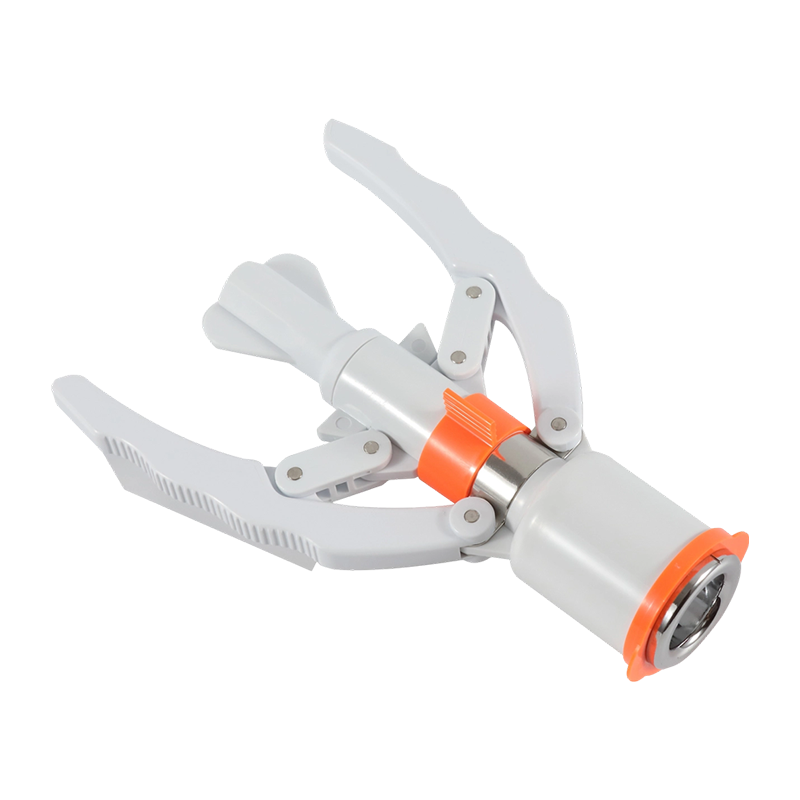
Clinical Advantages in Pediatric Patients
The evidence base for DCSD in children is growing. A randomized controlled trial involving 284 pediatric patients (ages 7–16) comparing DCSD against conventional dorsal slit circumcision found statistically significant advantages across every measured outcome. Children in the device group had shorter mean operative time, lower intraoperative and postoperative pain scores, reduced blood loss, faster incision healing, and higher parental satisfaction with cosmetic appearance — all with a lower complication rate.
A separate case series of 59 pediatric patients (ages 3–12) conducted at a regional hospital reported a mean operative time of 34.9 minutes including anesthesia preparation, with zero cases of wound dehiscence, hematoma, or wound infection. Mild preputial edema was the only consistent finding, resolving spontaneously after staple shedding without medication. These outcomes held across both general and local anesthesia groups, suggesting the device's short firing time and minimal tissue trauma make it tolerable even for younger children under local block.
The cosmetic results are consistently rated highly. Because the annular blade creates a uniform circular incision, the residual foreskin length is symmetrical and the healed wound line is smooth — outcomes that are difficult to replicate consistently with hand-sutured conventional technique.
Indications and Patient Selection for Children
The primary indications for pediatric circumcision using a DCSD mirror those for conventional surgery: true phimosis (non-retractable foreskin beyond age-appropriate physiological range), recurrent posthitis or balanitis unresponsive to topical steroid therapy, paraphimosis, and symptomatic redundant prepuce causing hygiene difficulty or urinary obstruction. Children who have completed a minimum four-week trial of steroid ointment without adequate improvement are reasonable surgical candidates.
Device sizing is a critical selection variable in pediatric cases. DCSD products are manufactured in multiple diameter sizes to accommodate the range of glans dimensions across different age groups. Selecting the correct size ensures the anvil fits snugly without excessive compression and that the annular knife clears tissue cleanly without tension or residual foreskin. Most manufacturers provide sizing guides correlating glans circumference with device model — surgeons should measure carefully rather than estimate, particularly in younger children where the margin for error is smaller.
Contraindications include hypospadias, epispadias, webbed penis, micropenis, and active local infection at the operative site. Children with bleeding disorders or significant systemic illness should be evaluated individually before proceeding.
Anesthesia Options and Postoperative Care
One of the practical advantages of the DCSD in pediatric practice is its compatibility with local anesthesia in cooperative older children. Because the firing mechanism is rapid and the tissue compression phase is brief, children aged approximately eight and above with adequate psychological preparation have demonstrated good tolerance under dorsal penile nerve block or topical lidocaine cream alone. For younger children or those with significant anxiety, short-duration general or intravenous sedation anesthesia remains the standard of care.
Postoperative management is minimal by design. Routine analgesia with acetaminophen for two to three days covers the peak discomfort window. Families should be advised that mild edema distal to the staple ring is normal and expected, typically resolving within one to two weeks as staples shed. Bathing is generally permitted after 24 hours, with wound site limited to gentle water cleansing. No wound dressing changes or daily antiseptic application are required in uncomplicated cases.
Delayed staple shedding beyond two weeks is an uncommon but recognized occurrence. In these cases, the rubber ring or remaining staples can be partially incised at a clinic visit to facilitate separation, typically achieving full shedding within one additional week.
What to Look for When Selecting a DCSD
Not all disposable circumcision suture devices are equivalent. For surgeons and procurement teams evaluating products, several quality indicators deserve close attention before committing to a device for routine pediatric use.
Staple cartridge stability is the most critical mechanical requirement. The assembled cartridge must remain firmly seated without deformation under the compression force applied during the procedure. Any loosening or displacement of the cartridge before firing creates an uneven staple line and increases bleeding risk. A well-designed device should pass a physical shake test — the cartridge surface should remain fully enclosed and show no movement after assembly.
Safety mechanism reliability directly affects both surgeon confidence and patient safety. The safety lock must disengage smoothly and predictably when the surgeon intends to fire, without stiffness that could cause inadvertent force compensation. Equally, the return spring of the trigger handle must provide sufficient elastic recoil to reset the handle and retract the annular knife promptly after firing — a sluggish or weak return spring is a functional defect, not a minor inconvenience.
Annular knife edge quality determines cut quality. The blade must be sharp enough to sever foreskin tissue in a single clean stroke without dragging, compression fracture, or edge chipping. Post-firing inspection of the blade should confirm no curl, chip, or deformation. Similarly, the cut edge of the excised tissue should be clean and uniform — a rough or ragged margin suggests blade quality failure.
Finally, assembly and disassembly smoothness matters operationally. All moving components — the adjusting nut, anvil seat, and trigger mechanism — should translate and rotate without jamming, binding, or excessive play. A device that requires force to assemble or shows looseness in key joints introduces intraoperative uncertainty that no surgical team should accept. Regulatory certifications including CE marking and ISO 13485 quality management compliance provide baseline assurance, but hands-on evaluation with sample units remains the most reliable pre-adoption assessment.

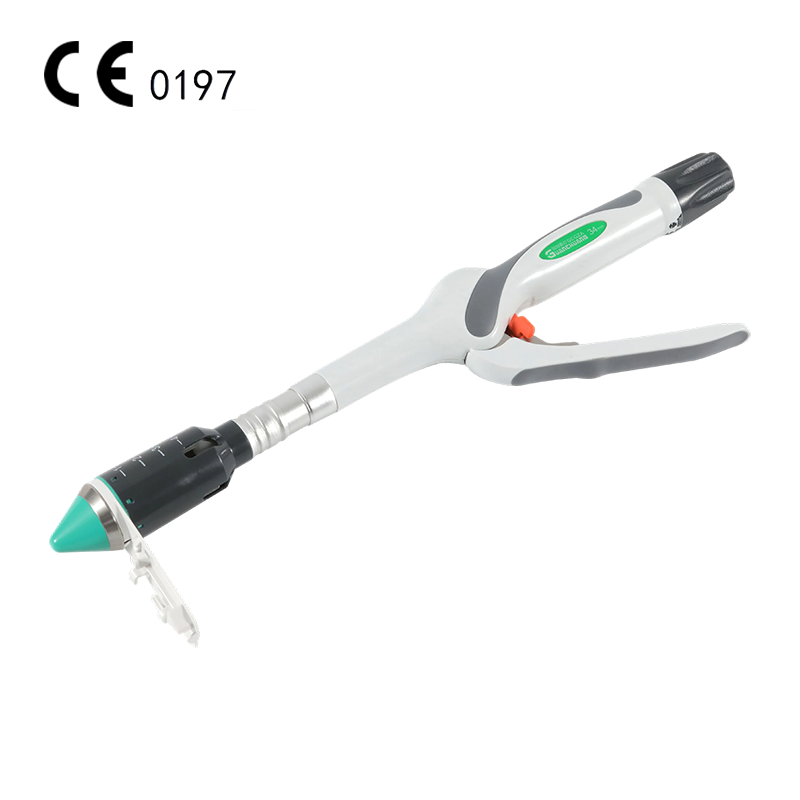
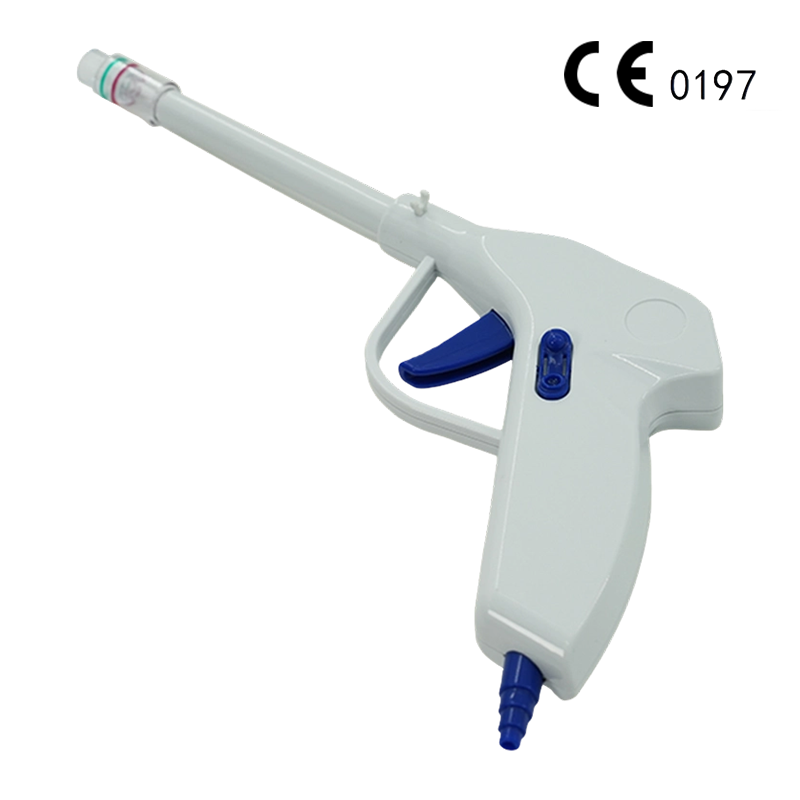

- Quick Links
- About Us
- Quality
- Service
- News
- Contact us
- Our Product
- Disposable Endoscopic Laparoscopic Instruments
- Disposable Wound Closure
- Thoracic Surgery Instruments
- Electrosurgery Instruments
- Open Surgical Instruments
- Urinary Anorectal Surgery Instruments
- Gastroenterology Surgical Instruments
- Medical Auxiliary Equipment
- Blood Preparation Device
- Contact us
- Tel:+86-519-69878833
- Phone:+86-13584319056
- E-mail:[email protected]
- Address:Building 2D, 2C and 3C, Wujin Sci-tech Pioneer Park, No. 256 Middle Mingxin Road, Hutang Town, Wujin District, Changzhou, 213164 Jiangsu P.R. China

