


 English
  Español
  اللغة العربية
  Russian
  Português
  Français
  ภาษาไทย
Industry News
Disposable Wound Closure Strips & Staplers Guide
Wound closure is one of the most fundamental procedures in clinical medicine, emergency care, and surgical practice. The materials and devices used to close a wound directly determine healing outcomes, infection risk, scarring, and patient comfort. Over the past two decades, the shift toward disposable wound closure solutions — including adhesive skin closure strips, wound staplers, and suture alternatives — has transformed both hospital and pre-hospital wound management. This guide covers the full landscape of disposable wound closure options, explains the clinical differences between them, provides practical guidance for selecting the right product for each wound type, and addresses what to look for when you need to wound closure strips buy for professional or personal use.
Content
- 1 Why Disposable Wound Closure Products Are the Clinical Standard
- 2 Skin Closure Strips for Cuts: How They Work and When to Use Them
- 3 Disposable Wound Staplers: Mechanism, Advantages, and Clinical Applications
- 4 Comparing Wound Closure Options: Strips, Staplers, and Sutures
- 5 What to Look for When You Need to Buy Wound Closure Strips
Why Disposable Wound Closure Products Are the Clinical Standard
The core argument for disposable wound closure devices is infection control. Reusable instruments — even when sterilized — carry residual contamination risk from biofilm formation, incomplete sterilization cycles, and surface micro-damage that traps biological material. Disposable products eliminate this risk entirely: each device is sterile at point of use, used once, and discarded. This satisfies the stringent medical sterility requirements that govern clinical environments and surgical suites, particularly in procedures where the wound site is in direct contact with the closure device or implanted material.
Beyond sterility, disposable wound closure products are engineered for single-use operational efficiency. They are pre-loaded, pre-calibrated, and ready to deploy without preparation time. In emergency settings — where speed of closure directly affects blood loss, contamination exposure, and patient stability — this immediacy is clinically significant. In elective surgical contexts, the consistency of a factory-assembled, sterile disposable device eliminates variability introduced by reprocessing, reducing the probability of device failure during the procedure. These combined advantages have made disposable wound closure the default specification across general surgery, emergency medicine, plastic surgery, and minimally invasive procedural environments.
Skin Closure Strips for Cuts: How They Work and When to Use Them
Skin closure strips for cuts are adhesive, non-invasive wound closure devices that hold wound edges together by bridging the gap with a flexible, coated tape applied perpendicular to the wound axis. Unlike sutures or staples, they do not penetrate the skin — the closure force is entirely mechanical, transmitted through the adhesive bond between the strip and the dry skin surface on either side of the wound. This non-invasive mechanism makes them the first choice for surface lacerations, minor surgical incisions, and wounds in patients where suture placement is technically difficult, such as elderly patients with fragile skin or children who cannot tolerate needle procedures.
Wound Types Best Suited to Closure Strips
Skin closure strips perform optimally on wounds that meet specific criteria. Using them outside these parameters reduces adhesion reliability and can result in wound reopening or inadequate apposition.
- Length under 12–15mm — Strips provide adequate tensile strength for short lacerations; longer wounds generate more tension across the closure line and may require sutures or staples for reliable apposition
- Clean, straight-edged cuts — Jagged or irregular wound edges cannot be held in precise apposition by adhesive strips alone; mechanical closure methods provide superior edge alignment in these cases
- Minimal active bleeding — Strips require dry skin for adhesion; wounds with ongoing hemorrhage must be controlled with direct pressure before strip application is attempted
- Low-tension anatomical locations — Strips are most reliable on the face, scalp, torso, and upper limbs; joints and high-mobility areas generate peel forces that compromise adhesion and lead to premature strip loss
- Post-operative incision support — Applied over healed suture lines after suture removal, strips provide additional support during the remodeling phase of wound healing, reducing dehiscence risk
Correct Application Technique for Skin Closure Strips
Application technique directly determines strip performance. Begin by thoroughly cleaning and drying the wound and a 3–4cm margin of surrounding skin. Moisture, blood, or topical antiseptic residue on the skin surface will prevent adequate adhesive bonding. If available, applying a thin layer of tincture of benzoin or skin-prep solution to the adhesion zones — avoiding the wound itself — significantly improves strip retention. Push the wound edges gently together with gloved fingers to achieve precise apposition before placing the first strip at the center of the wound. Apply subsequent strips working outward from the center, spacing them approximately 3mm apart. Each strip should cross the wound perpendicularly, with equal adhesive contact on both sides. If the wound is long enough to warrant additional support, applying parallel reinforcement strips along either side of the wound — not crossing it — anchors the bridging strips and prolongs retention under movement.
Disposable Wound Staplers: Mechanism, Advantages, and Clinical Applications
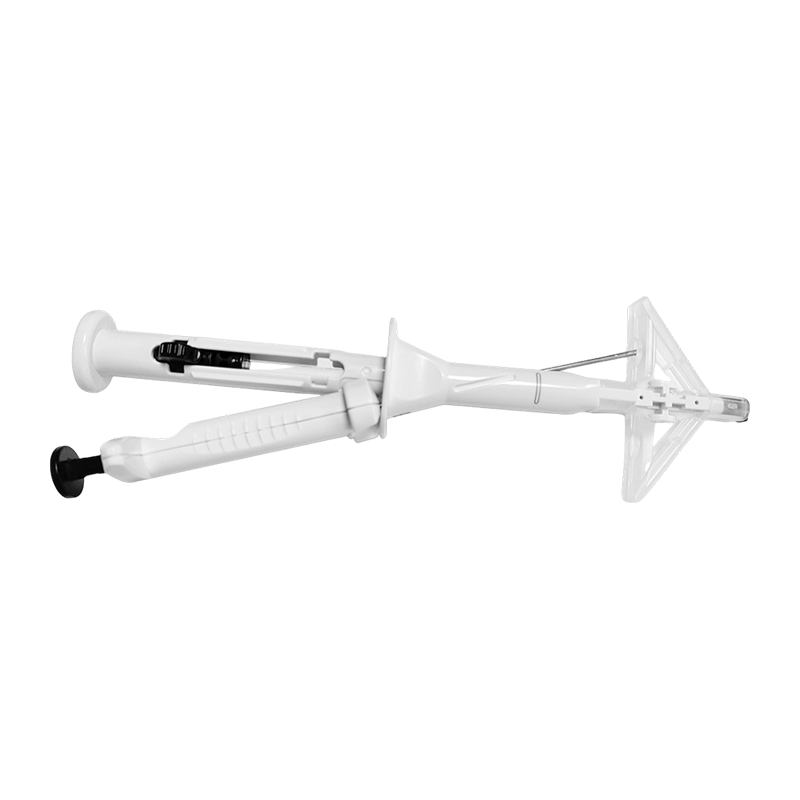
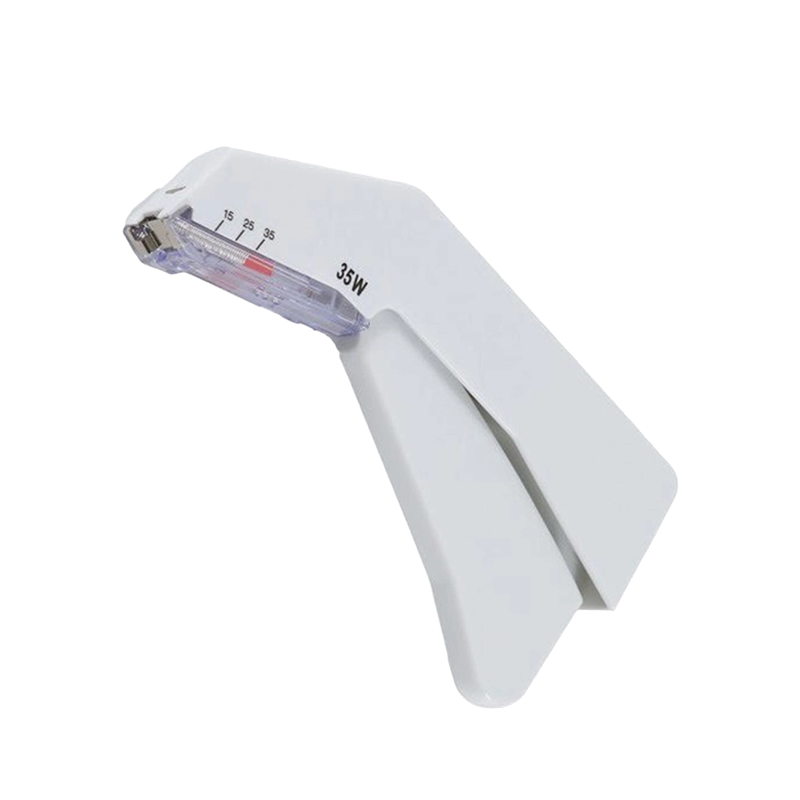
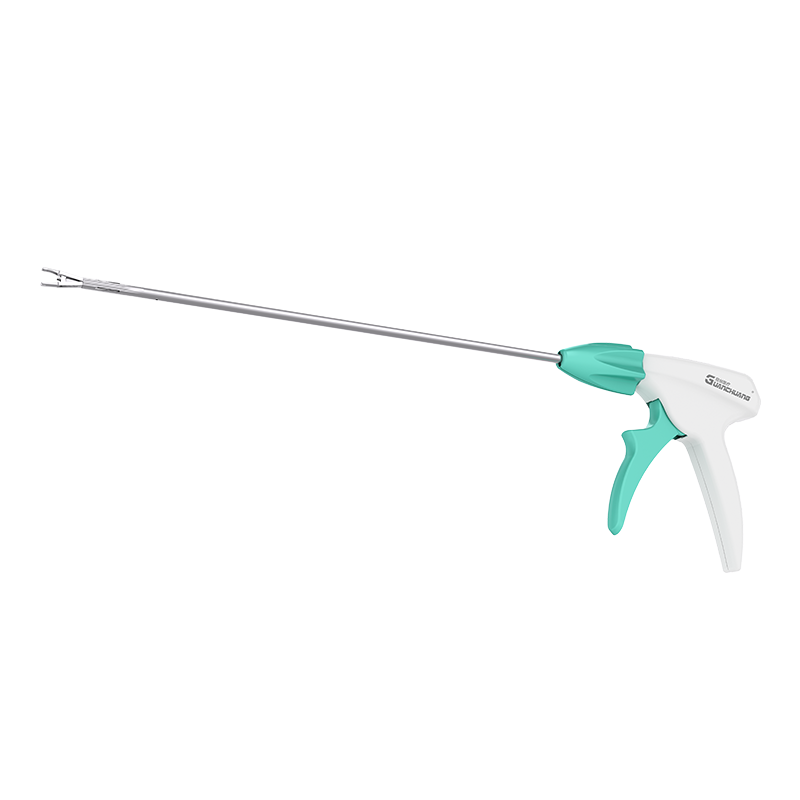
For wounds that exceed the capability of adhesive closure strips — longer lacerations, high-tension incisions, wounds in hair-bearing scalp, or high-volume emergency settings where closure speed is paramount — the disposable wound stapler provides a mechanically superior alternative. A disposable wound stapler consists of three primary components: a ergonomic handle, a pre-loaded staple cartridge containing medical-grade stainless steel or polymer staples, and a trigger mechanism that drives and forms each staple in a single actuation. The sterile, single-use design prevents cross-infection between patients, and the pre-loaded cartridge eliminates preparation time — the device is ready to use immediately upon opening the sterile packaging.
Clinical Advantages Over Traditional Suturing
The primary operational advantage of a disposable wound stapler over conventional suturing is speed. Each staple is placed in a single trigger actuation, compared to the multiple steps required to place, tie, and cut each individual suture. In emergency medicine, where a single clinician may need to close a scalp laceration on a conscious, uncooperative patient in minutes, this speed differential is practically significant. Equally important, stapler operation requires no specialized suturing skills — nursing staff, paramedics, and first responders can achieve reliable wound closure without suture training, expanding the clinical settings where effective mechanical wound closure can be performed.
The biocompatibility of the medical metal staples used in modern disposable staplers — typically 316L surgical stainless steel or high-grade polymer alternatives — is well established. These materials generate minimal tissue reaction, support clean wound apposition, and produce aesthetically consistent closure lines that minimize scarring when staples are removed at the appropriate time. For plastic surgery and dermatological applications, where cosmetic outcome is a primary clinical objective, the precise, uniform spacing achievable with a stapler often produces superior aesthetic results compared to hand-tied sutures placed under time pressure.
Where Disposable Staplers Are Most Commonly Used
Disposable wound staplers are deployed across a broad range of clinical settings, each exploiting a different aspect of their performance profile.
| Clinical Setting | Primary Use Case | Key Advantage |
|---|---|---|
| Emergency Medicine | Scalp lacerations, traumatic cuts | Speed of closure, minimal skill requirement |
| General Surgery | Surgical incision closure | Consistent apposition, reduced OR time |
| Plastic Surgery | Cosmetically sensitive wound closure | Uniform spacing, minimal scarring |
| Minimally Invasive Surgery | Port site and trocar incision closure | Minimal tissue damage, precise closure |
| Pre-hospital / Field Medicine | Traumatic wound management | No suture training required, immediate deployment |
Comparing Wound Closure Options: Strips, Staplers, and Sutures
Choosing between closure strips, staplers, and traditional sutures requires evaluating the wound characteristics, clinical setting, available skill set, and desired outcome. The following comparison covers the key decision factors.
| Factor | Skin Closure Strips | Disposable Stapler | Sutures |
|---|---|---|---|
| Invasiveness | Non-invasive | Minimally invasive | Invasive |
| Application Speed | Fast | Very fast | Slow |
| Skill Required | Minimal | Minimal | High |
| Scarring Risk | Low | Low to moderate | Moderate |
| Best Wound Type | Small, clean, low-tension cuts | Longer, high-tension lacerations | Complex, deep, irregular wounds |
| Infection Control | Excellent — sterile, single use | Excellent — sterile, single use | Good — depends on technique |
What to Look for When You Need to Buy Wound Closure Strips
When looking to wound closure strips buy for clinical, workplace first aid, or personal use, product specification matters as much as price. The following criteria should guide selection to ensure the strips purchased will perform reliably in the intended application.
- Sterile, individually wrapped packaging — Each strip or strip card should be supplied in a sealed, sterile pouch. Bulk non-sterile formats are not appropriate for wound contact use and should be avoided regardless of price advantage
- Hypoallergenic and latex-free adhesive — Medical-grade acrylic adhesive provides reliable bonding without sensitization risk for the broad patient population; latex-containing adhesives are contraindicated for a significant proportion of patients and should not be specified for general clinical stock
- Appropriate size range — Strips are available in multiple widths (4mm, 6mm, 12mm) and lengths (38mm, 76mm). Narrower strips suit facial wounds; wider strips provide more surface area for broader lacerations. Stocking an assorted pack covers the majority of clinical presentations
- Porous, breathable backing material — Nonwoven or perforated backing allows moisture vapor to escape from the wound surface, reducing maceration risk during the healing period. Occlusive backing materials are inappropriate for wound closure applications
- Verified CE marking or equivalent regulatory approval — For clinical procurement, confirm the product holds current CE marking (EU), FDA clearance (US), or equivalent regulatory approval as a Class I or Class II medical device, confirming it has been evaluated for safety and performance in wound closure applications
Whether the application is post-operative incision support in a surgical ward, laceration management in an emergency department, or first aid kit stocking for a workplace or school, disposable wound closure products — from adhesive skin closure strips for cuts through fully sterile disposable wound staplers — represent the current standard of care for fast, reliable, infection-controlled wound management. Selecting products that meet the clinical and regulatory specifications outlined above ensures that the disposable wound closure solution chosen will perform as required when it matters most.

- Quick Links
- About Us
- Quality
- Service
- News
- Contact us
- Our Product
- Disposable Endoscopic Laparoscopic Instruments
- Disposable Wound Closure
- Thoracic Surgery Instruments
- Electrosurgery Instruments
- Open Surgical Instruments
- Urinary Anorectal Surgery Instruments
- Gastroenterology Surgical Instruments
- Medical Auxiliary Equipment
- Blood Preparation Device
- Contact us
- Tel:+86-519-69878833
- Phone:+86-13584319056
- E-mail:[email protected]
- Address:Building 2D, 2C and 3C, Wujin Sci-tech Pioneer Park, No. 256 Middle Mingxin Road, Hutang Town, Wujin District, Changzhou, 213164 Jiangsu P.R. China

