


 English
  Español
  اللغة العربية
  Russian
  Português
  Français
  ภาษาไทย
Industry News
Disposable Cell Brush: Uses, Benefits & Selection Guide
What Is a Disposable Cell Brush
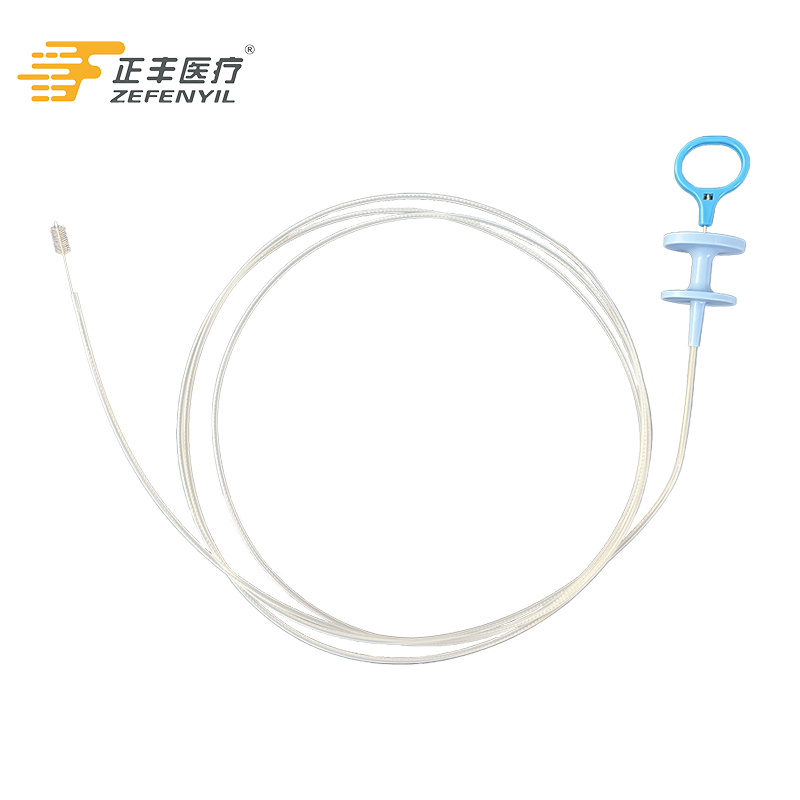
A disposable cell brush is a single-use medical device designed to collect cellular samples from body cavities, ducts, or surfaces for cytological examination. These sterile instruments feature soft bristles mounted on flexible or rigid shafts, enabling healthcare professionals to obtain adequate cell specimens with minimal patient discomfort.
Unlike traditional scraping methods, disposable cell brushes provide superior sample quality by capturing cells from deeper tissue layers while reducing contamination risks. The disposable nature ensures each patient receives a fresh, sterile instrument, eliminating cross-contamination concerns that plagued reusable alternatives in earlier decades.
Content
Primary Medical Applications
Disposable cell brushes serve critical roles across multiple diagnostic specialties. Their design versatility allows adaptation to various anatomical sites and clinical requirements.
Gynecological Sampling
Cervical cytology represents the most common application. Endocervical brushes collect transformation zone cells essential for Pap smear analysis. Studies demonstrate that brush-based sampling yields 30-40% higher cellularity compared to spatula-only methods, significantly improving detection rates for precancerous lesions.
Respiratory Diagnostics
Bronchial brushes access peripheral lung lesions during bronchoscopy procedures. These specialized brushes navigate narrow airways to sample suspicious nodules, achieving diagnostic accuracy rates exceeding 75% for malignant lesions when combined with other sampling techniques.
Biliary and Pancreatic Evaluation
During ERCP procedures, biliary brushes collect cells from bile duct strictures. This technique helps differentiate benign from malignant obstructions, with sensitivity rates ranging from 40-60% depending on stricture characteristics and operator experience.
Urological Assessment
Urinary tract brushes sample bladder mucosa and upper urinary tract lesions. They prove particularly valuable for patients with indeterminate urine cytology results, providing targeted sampling that improves diagnostic yield by approximately 25%.
Key Advantages Over Reusable Alternatives
The transition from reusable to disposable cell brushes reflects fundamental improvements in patient safety, procedural efficiency, and diagnostic reliability.
| Factor | Disposable Brushes | Reusable Brushes |
|---|---|---|
| Sterilization Requirement | None - pre-sterilized | Mandatory between uses |
| Cross-contamination Risk | Negligible | Present if sterilization fails |
| Bristle Integrity | Consistent quality | Degrades with repeated use |
| Processing Time | Immediate availability | Hours for cleaning/sterilization |
| Cost per Procedure | $2-8 per unit | Lower initial cost but higher maintenance |
Healthcare facilities report 15-20% reduction in overall procedural costs after switching to disposable systems when accounting for sterilization labor, equipment depreciation, and infection-related complications.
Proper Usage Techniques
Maximizing diagnostic yield requires adherence to evidence-based sampling protocols specific to each anatomical site.
Pre-procedure Preparation
- Verify package integrity and expiration date before opening
- Select appropriate brush type based on target anatomy
- Prepare collection medium or slide according to laboratory specifications
- Ensure adequate visualization of the sampling site
Sampling Execution
Insert the brush gently to the target area using rotational movements rather than forceful pushing. For cervical sampling, rotate the brush 3-5 times clockwise while maintaining contact with the endocervical canal. Bronchial brushes require similar rotation within the lesion area for 5-10 seconds.
Avoid excessive pressure that causes bleeding, as blood dilutes cellular samples and complicates interpretation. If significant bleeding occurs, document this finding as it may indicate vascular lesions requiring different management.
Sample Transfer
Immediately transfer collected material to preserve solution or smear onto slides. For liquid-based cytology, agitate the brush vigorously in the vial for 10-15 seconds to release cells. When preparing direct smears, roll the brush across the slide surface using gentle, even pressure to create a thin, uniform layer.
Selection Criteria for Clinical Settings
Choosing appropriate disposable cell brushes requires evaluating multiple technical and clinical factors.
Bristle Characteristics
Bristle material affects both sample quality and patient comfort. Nylon bristles offer optimal flexibility and cell retention for most applications. Softer synthetic fibers suit sensitive mucosal surfaces, while stiffer configurations work better for fibrotic or keratinized tissues.
Bristle length typically ranges from 5-20mm, with shorter brushes ideal for confined spaces like endocervical canals and longer versions suitable for bronchial or biliary access.
Shaft Design Considerations
Flexible shafts navigate curved anatomical pathways but may lack the rigidity needed for precise positioning. Rigid shafts provide better control in straight channels but cannot accommodate sharp angles. Some manufacturers offer semi-rigid options combining moderate flexibility with adequate support.
Length and Diameter Specifications
| Application | Typical Length | Shaft Diameter |
|---|---|---|
| Endocervical | 15-20cm | 2-3mm |
| Bronchial | 90-120cm | 1.5-2.5mm |
| Biliary | 150-200cm | 1.8-2.3mm |
| Urinary | 40-60cm | 2-4mm |
Regulatory Compliance
Verify that products carry appropriate certifications including FDA clearance, CE marking, or ISO 13485 compliance. Documentation should confirm sterility validation using ethylene oxide or gamma irradiation methods with documented sterility assurance levels of 10^-6 or better.
Quality Indicators and Performance Metrics
Evaluating disposable cell brush performance requires monitoring several objective parameters that directly impact diagnostic accuracy.
Cellular Yield Measurements
High-quality brushes consistently deliver adequate cellularity defined as minimum 5,000 well-preserved epithelial cells for gynecological samples. Laboratory rejection rates below 2% indicate reliable product performance. Track specimen adequacy rates quarterly to identify potential supply issues.
Bristle Retention Testing
Bristle shedding compromises sample integrity and creates foreign body risks. Acceptable products demonstrate zero bristle loss during standardized agitation tests simulating clinical use. Report any bristle detachment incidents immediately to manufacturers and regulatory authorities.
Packaging Integrity
Inspect packaging for tears, moisture damage, or compromised seals before use. Sterile barrier systems must maintain integrity throughout storage and transportation. Products with damaged packaging should be discarded regardless of apparent condition.
Storage and Handling Protocols
Proper storage preserves sterility and functional characteristics of disposable cell brushes until point of use.
- Store in controlled environments maintaining 15-25°C temperature and 30-60% relative humidity
- Keep packages away from direct sunlight and UV exposure which degrades plastic components
- Implement first-expiry-first-out inventory rotation to prevent waste
- Avoid stacking heavy items on brush packages to prevent deformation
- Maintain minimum 3-month stock buffer to prevent supply disruptions
Most disposable cell brushes carry 2-3 year shelf lives from manufacturing dates when stored under recommended conditions. Verify expiration dates during receiving inspections and remove expired products from clinical areas immediately.
Environmental and Economic Considerations
While disposable devices generate more waste than reusable alternatives, comprehensive lifecycle analyses reveal nuanced environmental impacts.
Manufacturers increasingly adopt eco-friendly materials including biodegradable polymers and reduced packaging designs. Some brands now offer carbon-neutral certified products through offset programs and renewable energy manufacturing processes.
From economic perspectives, bulk purchasing agreements reduce per-unit costs by 20-35% for high-volume users. Group purchasing organizations negotiate additional discounts of 10-15% for member facilities. Calculate total cost of ownership including disposal fees, which typically add $0.50-1.00 per unit depending on local regulations.
Waste segregation protocols should classify used brushes as regulated medical waste requiring incineration or autoclaving before landfill disposal. Proper classification prevents unnecessary hazardous waste handling costs while ensuring regulatory compliance.
Future Developments and Innovations
Emerging technologies promise enhanced functionality for next-generation disposable cell brushes.
Integrated Sampling Systems
New designs incorporate built-in collection chambers that automatically preserve samples upon withdrawal. These closed systems reduce contamination risks and simplify workflow by eliminating separate transfer steps. Early clinical trials show 15% improvement in sample adequacy compared to conventional brushes.
Smart Brush Technologies
Prototype devices embed sensors measuring applied pressure, rotation count, and sampling duration. Real-time feedback guides operators toward optimal technique, potentially standardizing sample quality across varying skill levels. Integration with electronic health records enables automatic documentation of procedural parameters.
Enhanced Biomarker Preservation
Specialized coatings protect cellular DNA, RNA, and protein markers during collection and transport. These advances support molecular diagnostics alongside traditional cytology, enabling comprehensive genomic profiling from single samples. Preservation improvements extend viable analysis windows from hours to several days at room temperature.


- Quick Links
- About Us
- Quality
- Service
- News
- Contact us
- Our Product
- Disposable Endoscopic Laparoscopic Instruments
- Disposable Wound Closure
- Thoracic Surgery Instruments
- Electrosurgery Instruments
- Open Surgical Instruments
- Urinary Anorectal Surgery Instruments
- Gastroenterology Surgical Instruments
- Medical Auxiliary Equipment
- Blood Preparation Device
- Contact us
- Tel:+86-519-69878833
- Phone:+86-13584319056
- E-mail:[email protected]
- Address:Building 2D, 2C and 3C, Wujin Sci-tech Pioneer Park, No. 256 Middle Mingxin Road, Hutang Town, Wujin District, Changzhou, 213164 Jiangsu P.R. China

