


 English
  Español
  اللغة العربية
  Russian
  Português
  Français
  ภาษาไทย
Industry News
Biocompatible Titanium Rib Fracture Fixation Plate: Benefits & Clinical Uses
Rib fractures are among the most common thoracic injuries encountered in trauma surgery, yet they remain one of the most challenging to manage effectively. For decades, surgeons relied on conservative treatment or cumbersome open procedures. Today, the biocompatible titanium rib fracture fixation plate has become the gold standard for surgical stabilization — combining material science, minimally invasive technique, and clinical precision in a single implant solution.
Content
- 1 What Is a Biocompatible Titanium Rib Fracture Fixation Plate?
- 2 Why Biocompatibility Matters in Rib Fixation
- 3 The Advantages of Minimally Invasive Rib Fixation
- 4 Lightweight Design: Clinical Benefits of a 2-Gram Plate
- 5 Applications: Who Benefits from Titanium Rib Fixation Plates?
- 6 Sterility and Compliance Standards
- 7 Conclusion
What Is a Biocompatible Titanium Rib Fracture Fixation Plate?
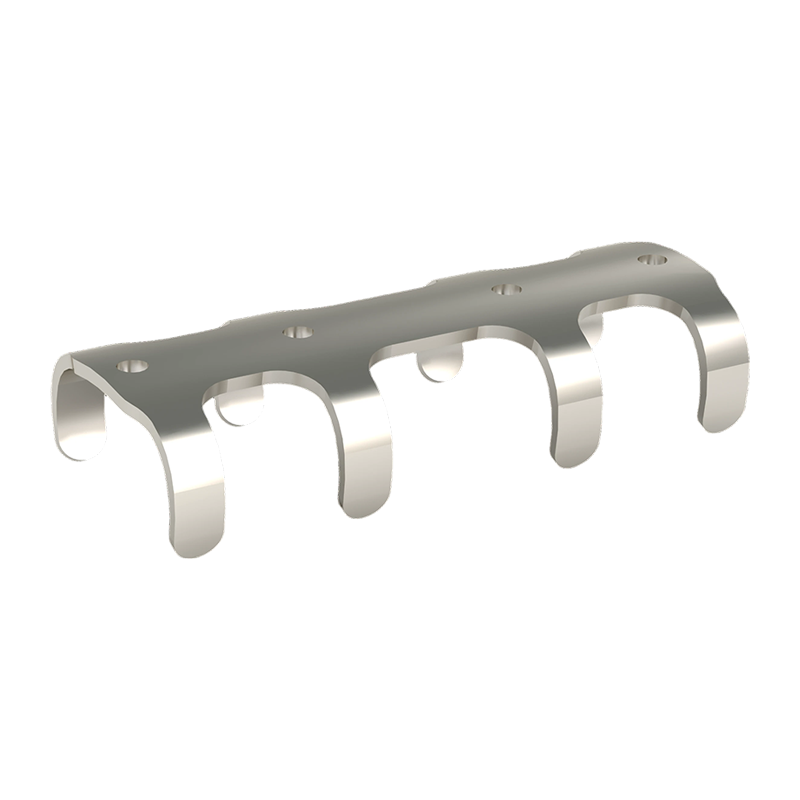
A rib fracture fixation plate is a surgically implanted device designed to stabilize broken or displaced ribs, restore chest wall integrity, and support proper bone healing. Unlike early fixation hardware made from stainless steel or less refined alloys, modern rib plates are manufactured from pure titanium — specifically grade TA2G — which must comply with the chemical composition and microstructural requirements defined in GB/T 13810-2017.
This material standard ensures consistent mechanical performance, corrosion resistance, and long-term safety inside the human body. The surface finish is typically black-gray anodized, which further enhances surface stability and wear resistance. Plates are available in both non-sterile and pre-sterilized delivery forms, with irradiation-sterilized products carrying a five-year shelf life.
Why Biocompatibility Matters in Rib Fixation
Biocompatibility is not simply a regulatory checkbox — it is a clinical requirement that directly affects patient outcomes. When an implant lacks full biocompatibility, the body may mount an inflammatory response, accelerate implant degradation, or generate ion release that causes local tissue damage.
Pure titanium addresses all of these concerns. It contains no iron ions, eliminating one of the primary sources of metallic corrosion and allergic reaction associated with steel-based implants. Its passive oxide layer forms spontaneously on the surface, providing a chemically inert barrier between the implant and surrounding tissue.
A critical clinical advantage of this biocompatibility profile is that removal surgery is not required. Once the rib has healed, the plate remains in place without causing long-term adverse effects — sparing the patient a second operative procedure and its associated risks.
The Advantages of Minimally Invasive Rib Fixation
Traditional open reduction and internal fixation of rib fractures required extensive incisions, significant muscle dissection, and prolonged operative time. The shift toward minimally invasive rib fixation has changed this equation substantially.
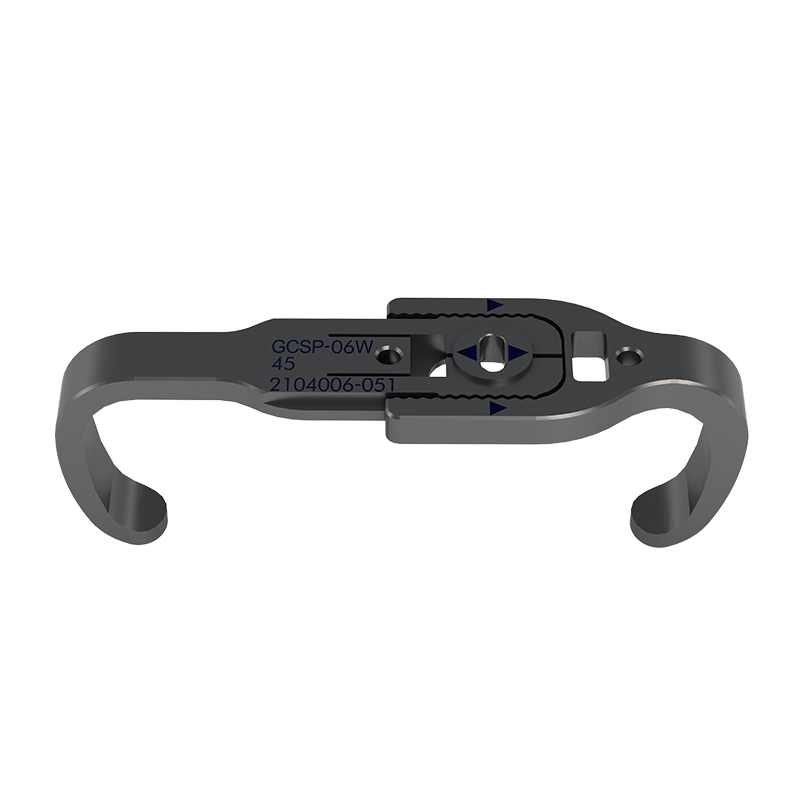
Modern titanium rib plates are designed for minimally invasive implantation using dedicated clips specific to each rib site. This site-specific clip system allows surgeons to seat and secure the plate accurately without excessive tissue disruption. The result is reduced intraoperative blood loss, shorter operative time, and less postoperative pain compared to conventional open approaches.
For facilities that perform thoracic procedures across a range of indications, having access to purpose-designed thoracic surgery instruments that complement the implant system is essential for maintaining procedural consistency and safety.
Research published in peer-reviewed thoracic surgery literature confirms that surgical success rates with minimally invasive titanium plate fixation exceed 98% in appropriately selected patients, with mean operative times under 90 minutes and average blood loss below 150 ml.
Lightweight Design: Clinical Benefits of a 2-Gram Plate
Weight is rarely the first factor surgeons consider when selecting an implant — but in rib fixation, it matters more than in most other orthopedic applications. The rib cage is a dynamic structure that moves with every breath. Any implant placed on the chest wall must allow for this continuous motion without creating mechanical fatigue, tissue irritation, or respiratory restriction.
At approximately 2 grams per plate, pure titanium rib fixation plates impose virtually no additional burden on the chest wall. This lightweight characteristic supports natural respiratory mechanics during the healing phase, reducing the risk of post-fixation respiratory complications that have historically been associated with heavier implant materials.
Flexible fixation design further ensures that intercostal nerves are not compressed during or after implantation — a detail with direct implications for chronic pain prevention and patient quality of life in the months following surgery.
Applications: Who Benefits from Titanium Rib Fixation Plates?
The clinical indications for titanium rib fracture fixation plates span a broad range of thoracic pathology:
- Multiple rib fractures with displacement — particularly where conservative management has failed or where fracture geometry creates instability
- Flail chest — a life-threatening condition in which multiple consecutive ribs fracture in two or more places, disrupting chest wall mechanics and impairing ventilation
- Post-thoracotomy rib fixation — stabilizing ribs fractured as a consequence of lateral thoracotomy access during other surgical procedures
- Rib reconstruction after tumor resection — restoring structural continuity following surgical removal of rib tumors or segments affected by malignancy
- Congenital rib deformities — select cases of chest wall abnormality where structural support facilitates corrective outcomes
Each of these indications benefits from the same core properties: lightweight construction, biocompatible material, secure fixation, and a minimally invasive implantation pathway. For surgical teams seeking a comprehensive range of disposable surgical instruments to support thoracic procedures, ensuring compatibility between fixation hardware and ancillary instruments is an important procurement consideration.
Sterility and Compliance Standards
For any surgically implanted device, sterility assurance and regulatory compliance are non-negotiable. Titanium rib fixation plates are available in two delivery configurations to accommodate different hospital procurement and sterilization workflows:
| Delivery Type | Sterilization Method | Shelf Life | Suitable For |
|---|---|---|---|
| Non-sterile | Hospital reprocessing | Per facility protocol | Facilities with validated in-house sterilization |
| Pre-sterilized | Irradiation (gamma) | 5 years | Direct-to-OR use, simplified inventory management |
Material compliance with GB/T 13810-2017 governs both the chemical composition and microstructure of the titanium used, providing a documented quality baseline that aligns with international standards for surgical implant materials. This traceability is particularly important for institutions operating under ISO 13485 quality management frameworks or preparing for regulatory submissions in export markets.
Facilities seeking partners who maintain rigorous quality systems for sterile surgical instruments will find that implant material compliance and sterilization method documentation are key differentiators when evaluating suppliers.
Conclusion
The biocompatible titanium rib fracture fixation plate represents a mature, well-validated solution to one of thoracic surgery's most persistent clinical challenges. Its combination of pure titanium construction, minimally invasive implantation design, lightweight profile, and compliance with international material standards makes it a reliable choice for trauma surgeons, thoracic specialists, and hospital procurement teams alike. As surgical techniques continue to evolve toward less invasive approaches with faster patient recovery, titanium rib fixation plates remain at the center of that progress.


- Quick Links
- About Us
- Quality
- Service
- News
- Contact us
- Our Product
- Disposable Endoscopic Laparoscopic Instruments
- Disposable Wound Closure
- Thoracic Surgery Instruments
- Electrosurgery Instruments
- Open Surgical Instruments
- Urinary Anorectal Surgery Instruments
- Gastroenterology Surgical Instruments
- Medical Auxiliary Equipment
- Blood Preparation Device
- Contact us
- Tel:+86-519-69878833
- Phone:+86-13584319056
- E-mail:[email protected]
- Address:Building 2D, 2C and 3C, Wujin Sci-tech Pioneer Park, No. 256 Middle Mingxin Road, Hutang Town, Wujin District, Changzhou, 213164 Jiangsu P.R. China

